The Vietnamese betel and areca nut culture is not a practice that appeared overnight, but one with deep roots tied to the nation's long history. Approximately ten thousand years ago, areca nuts were found in archaeological sites belonging to the Hoa Binh culture. Through the many ups and downs of time, from the dawn of nation-building to the pages of ancient history, the areca palm and betel leaf have quietly remained with the people, creating a system of behavior that is incredibly refined and polite through the philosophy of betel and areca and the act of offering betel.
Why is the philosophy of betel and areca called a philosophy of love and loyalty? Traditional Vietnamese society was family-centered, where the bond between husband and wife was fully entrusted through a deep, inseparable connection. As Ho Xuan Huong once wrote:
“If we are destined for each other, let us be as vibrant as the betel,
Do not turn as green as a leaf or as pale as lime.”
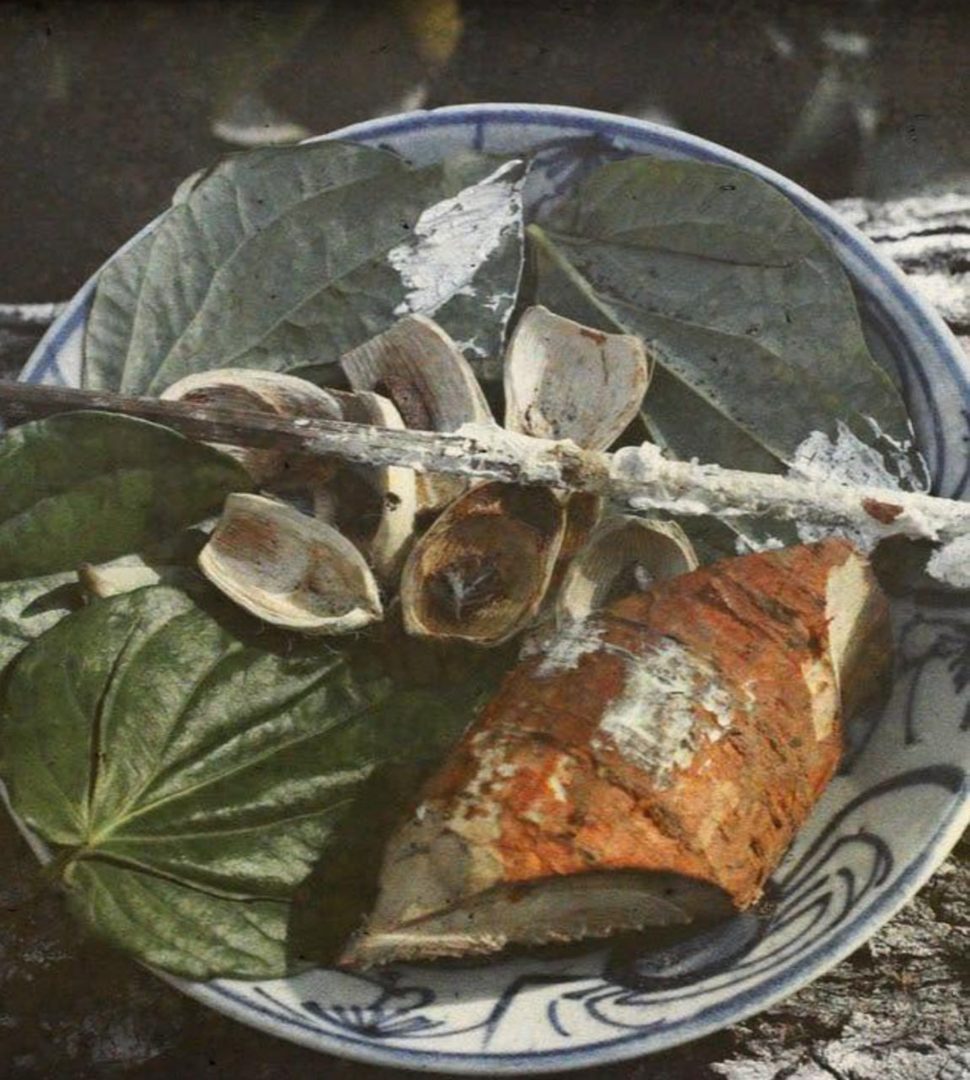
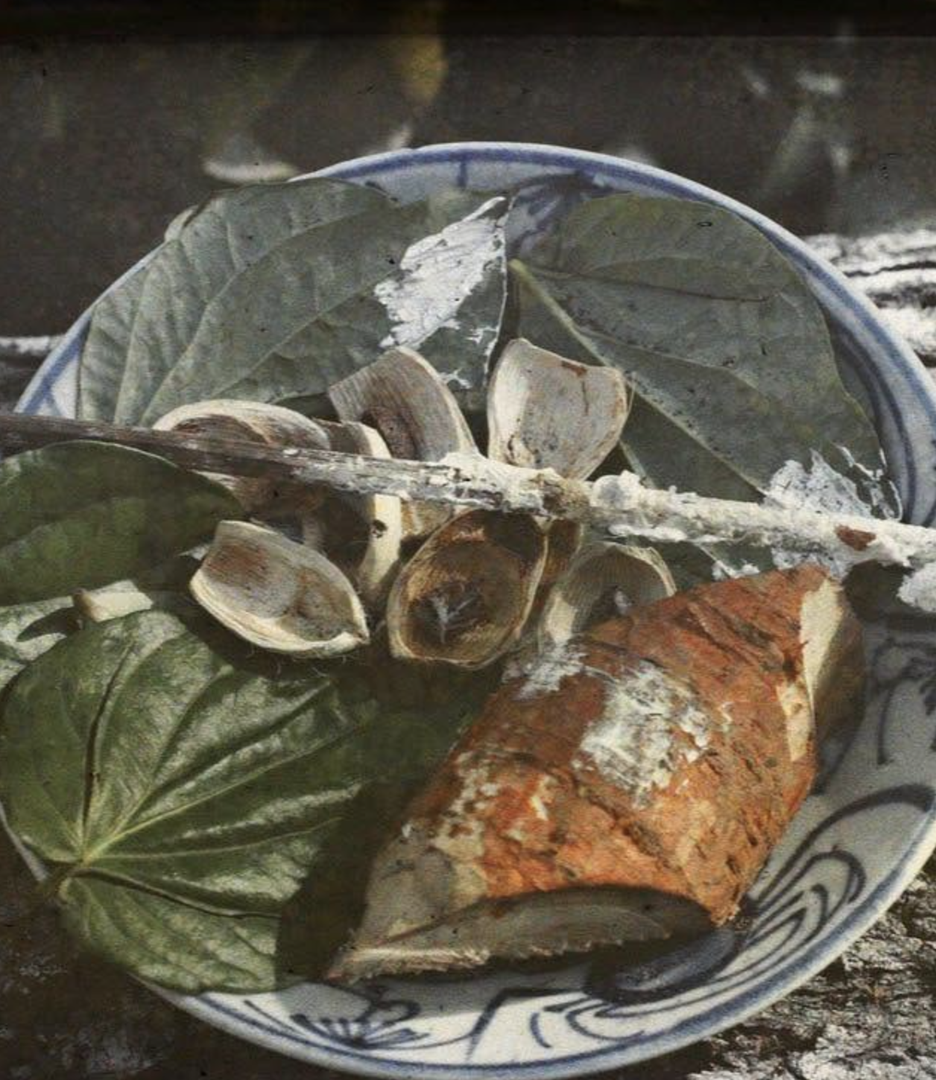
Looking at a prepared betel quid, one sees a harmony of soothing colors: the green areca nut, the white flesh, the bright yellow seed, the green betel leaf, the white lime, the bright red bark... all blending perfectly in the human mouth. And strangely enough, after being chewed thoroughly, the betel quid produces a deep red color—the color of blood, of life, of eternal and boundless life.
Betel and areca have followed people through the rhythms of heartfelt courtship:
“Entering the garden to pick a green areca nut,
I slice it into six pieces to invite you to share a betel quid,
This betel is for our connection, for our love,
Betel of the phoenix and the dragon, betel for you to take me as your own…”
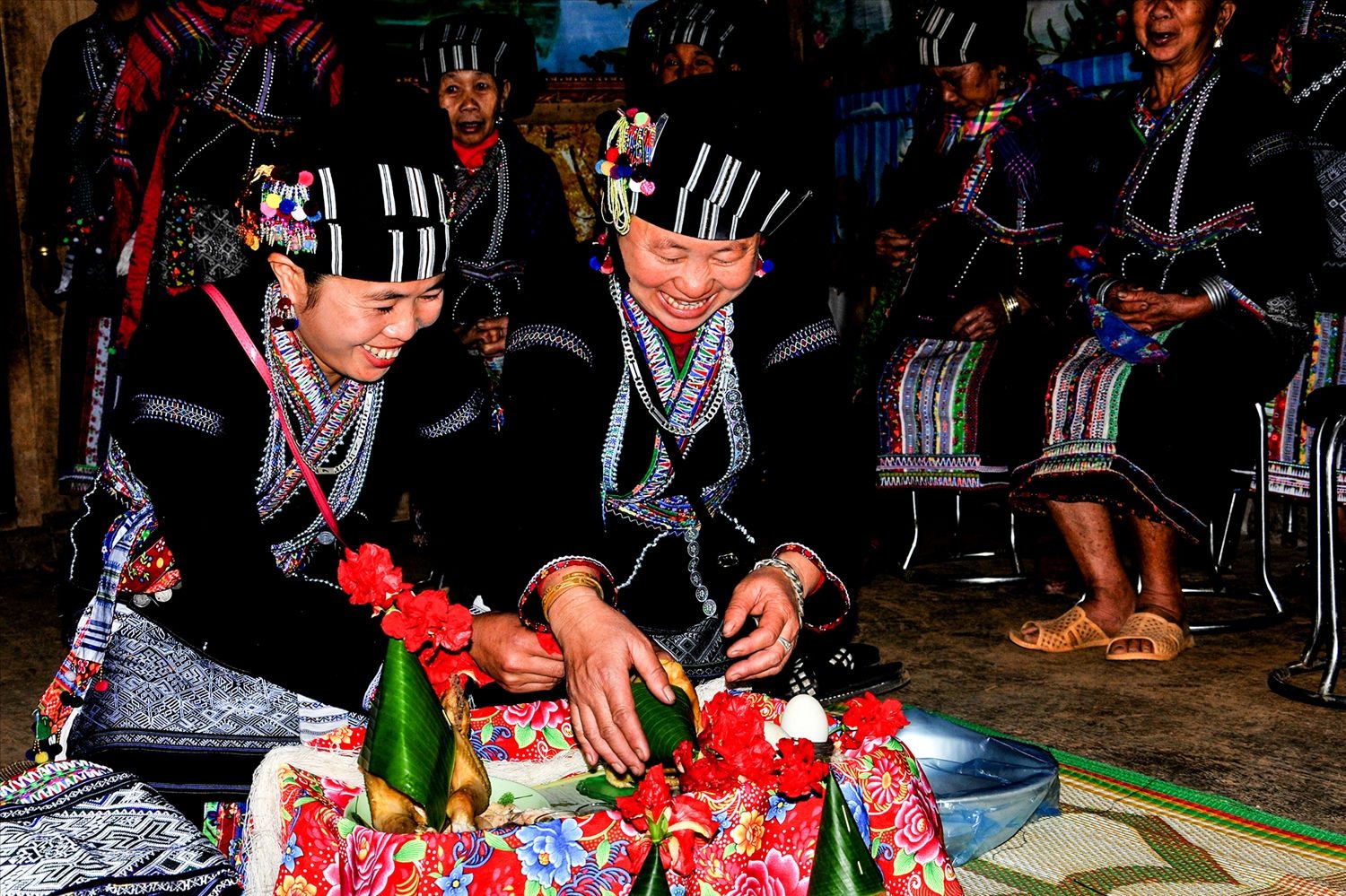
People propose with betel and areca; marriage proposals, formal introductions, and engagement ceremonies all involve them. It is a very Vietnamese ritual, unique and deeply rooted in identity, which even today remains a symbol of good and auspicious things. And once married, when the husband left for national duty, the devoted wife would still prepare a betel quid to entrust her love and loyalty as she sent him off to the battlefield:
“A brocade pouch mixed with a pink pouch,
Preparing a sword-wing shaped betel quid for my husband to go to war…”
A beautiful value, a beautiful gesture. Beautiful and polite. Hidden charm, concealed love, and underlying meanings are all entrusted in the betel quid as a blessing and a wish for victory: at home, there is the phoenix and dragon betel, while for those going to war, there is the sword-wing betel.
Betel and areca also embody the bond of brotherhood through the moving legend of family affection: a husband, a wife, and an unfortunate younger brother. Understanding that living in division among brothers leads to death, yet the regret that compensates for death through transformation—dying only to be reborn through regret, manifesting in the betel, areca, and lime, harmonizing eternally in the betel quid. A mysterious and wonderful philosophy of life, one that does not need to be preached with wordy sermons or "sacred scriptures," but is a profound "philosophy of silence." In the past, people shared betel to announce the happy news of children coming of age, getting married, or moving out—how much more profound and emotional than the paper-wasting wedding invitations of today. Westerners who visited Vietnam in the 17th century remarked that the Vietnamese carried betel bags wherever they went. Upon meeting, after the initial greetings, they would open their betel bags, exchange betel quids, and chat while chewing. How affectionate, trusting, and polite!
The betel quid is simple: it consists only of betel, areca, and lime, with the possible addition of a bit of bark or tobacco for those who chew it with tobacco. Yet, the betel quid carries a strong sense of human personality. People prepare betel to offer one another, and unlike the industrial cigarettes of today, the handmade betel quid of the past was uniquely personalized.
Looking at a betel quid, one can guess the personality of the person who prepared it—simple or elaborate, rich or bland, depending on the amount of lime spread on the leaf, sometimes even with a flavor that is "bold with cinnamon in the middle and spicy at both ends." The prince in the fairy tale recognized Tam precisely because of the betel quid, thanks to the beautiful or unrefined shape of the prepared quid, the folds of the leaf, and the wings of the betel. By chewing the betel, one gains a deeper understanding of the sender's character.
Chewing betel also brings practical benefits to health and spirit. It strengthens and nourishes the teeth thanks to the lime, helps resist the cold, mildly stimulates the circulatory and nervous systems, and makes the cheeks rosy and more charming. Chewing betel makes one feel slightly tipsy, allowing intimate conversations to become more open. People in the past were more open than people today; could this be part of the reason? The "tipsy-sober" state of the betel quid reminds us to be alert when working, but also to know how to be pleasantly tipsy at the right time and place when living at leisure, relaxing, and having fun with friends.
Vi Heritage reflects that, in a modern world full of changes, even if the pace of life sweeps away some old customs, the betel and areca culture will forever remain the crystallization of Vietnamese human affection, where people preserve the essence of warmth and loyalty.
Ready for the journey?