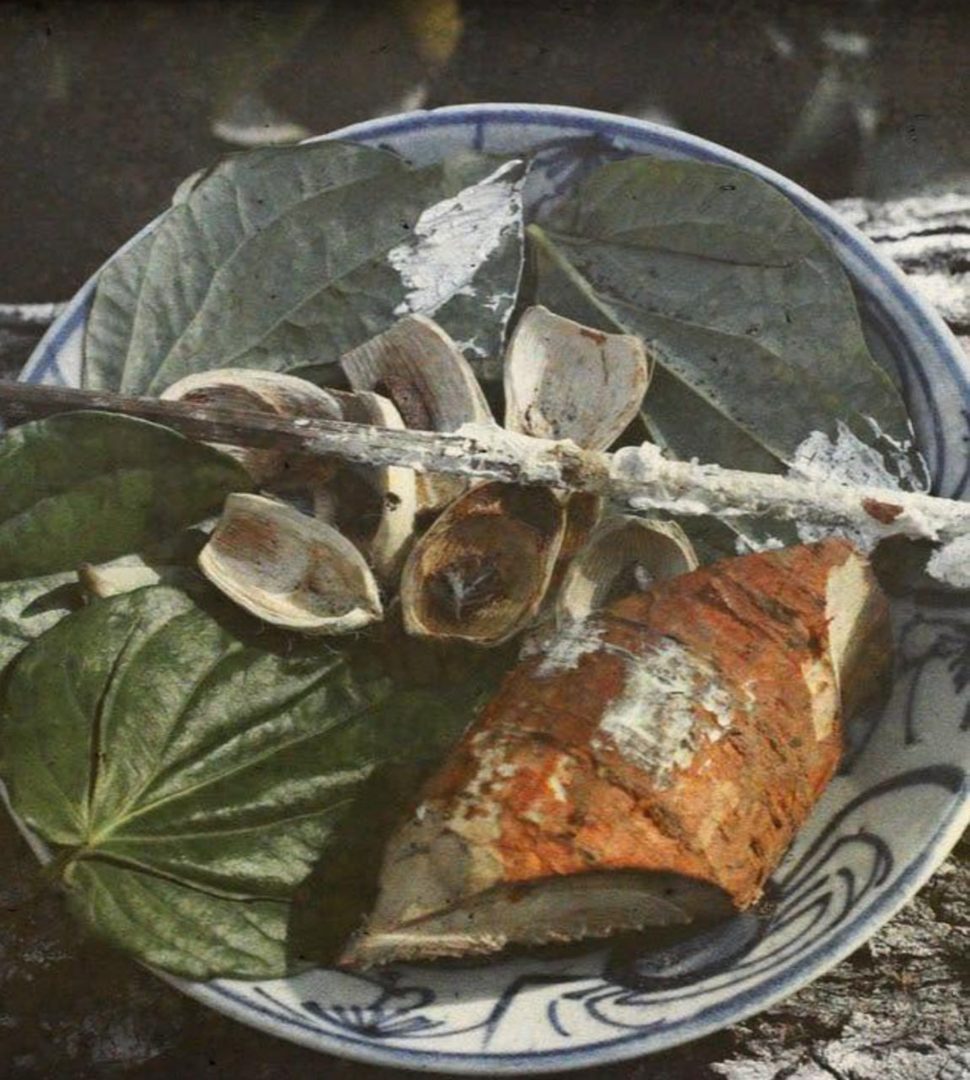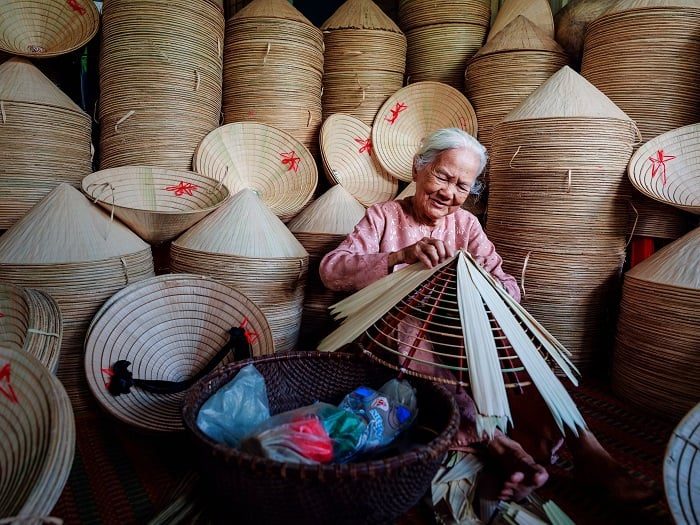
There is a poetic distinction in the Vietnamese folk artisans. The Chinese elite favored perfection; items had to be crafted according to strict standards, and any deviation meant destruction or punishment for the artisan. However, we Vietnamese, from the prehistoric Dong Son bronze age through many ups and downs, have leaned more toward natural inspiration. We are accustomed to the philosophy that 'if it is whole, make a ladle; if it breaks, make a scoop'; a round pot is good, but a misshapen one is also fine, as the distortions from the kiln fire sometimes become a hidden charm. The ancient bronze village of Dai Bai, therefore, preferred hammering and beating over rigid molding. Similarly, the silk villages of Van Phuc and Ke Do wove strips of nai, soi, silk, la, sa, the, brocade, and voc... with the sensitivity of hands that understood every warp thread, every crimson loom thread, and every knot.
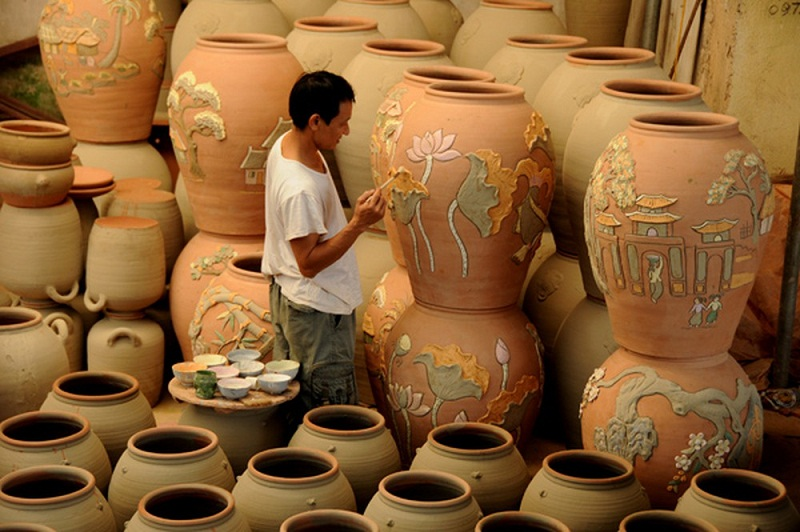
Yet, this improvisational nature and the fragmented work habits of a small-scale agricultural era faced a harsh challenge when entering the flow of modernization. History records that in the 17th and 18th centuries, Western and East Asian merchants were enamored with our silk and do paper, but would click their tongues in regret due to a lack of color standards, a lack of printing techniques, and the fact that our artisans at the time were unfamiliar with the language of international trade. Today, the story is not just about a lack of markets, but more painfully, the risk of a break in tradition. Master craftsmen carrying the secrets of crackled glaze, intricate wood joinery, and esoteric metallurgy are passing away one by one. The younger generation is leaving the villages for their livelihoods. And the old quarter of thirty-six streets, once the gathering place for the essence of craft villages, is now gradually losing the sound of hammers and the rhythm of shuttles.
Looking back at tens of thousands of years of history, from when prehistoric humans picked up shells, bamboo, and stone to create tools, through the agricultural revolution and pottery in the Neolithic Age, to the brilliant Bronze and Iron Ages, handicrafts have never been static objects. They are a way of survival, the flesh and blood of life. Vietnamese craft villages formed and persisted durably because of the inseparable bond between the countryside and the market. The artisan was both a small-scale farmer and a refiner of exquisite skills, establishing guilds, so that skilled workers from Bat Trang, Ngu Xa, Canh Dien, Dao Quat... brought their crafts to the capital to establish Hang Bac, Hang Dao, Hang Manh, and Hang Dong. The city embraced the essence of the craft villages, creating a fiercely competitive environment to stimulate the skills of masters to reach their peak; conversely, the peripheral craft village belt supplied an endless flow of culture and goods for the urbanites.
If those talented hands are lost, cultural heritage will only be dry, lifeless shells lying silently in museum display cases. UNESCO, as well as the State's cultural projects, have repeatedly affirmed that restoring traditional craft activities and protecting the subjects of culture is the core nucleus of conservation work. Artisans cannot protect heritage with enthusiasm or nostalgia alone if the craft cannot provide their daily bread. When golden hands have no sustainable livelihood, all slogans for cultural revival easily become fragile in the face of the market economy's vortex.
That is the reason Vi Heritage has chosen its path: taking the livelihood of those who practice cultural heritage as the center of development. We believe that in-depth cultural tourism is not about turning craft villages into flashy, superficial performance stages, but about building a circular ecosystem where artisans can live decently from the very essence their ancestors left behind. By connecting travelers with authentic experiences and telling the cultural story behind every wood grain, drop of glaze, and silk thread, Vi Heritage not only helps artisans solve the problem of marketing and repositioning aesthetic value but also awakens the pride of the local community.
When tourism becomes a practical economic lever, young people will find a legitimate reason to stay by the threshold of the old workshop, continuing the flame of their ancestors' craft instead of wandering aimlessly in the city. Preserving a living heritage is not simply keeping a horizontal lacquered board, an ancient communal house, or a traditional weaving process, but first and foremost, it is keeping the breath, the smile, and the prosperous life of the workers who are silently building the nation day and night.
Ready for the journey?