We are living in an era where every moment of human life seems to be standardized, measured, and placed on the scales of industrial medicine. The home birth practices of ethnic minority women are sometimes viewed through harsh prejudices. People call them backward, a risk that must be eliminated by externally imposed standards.
But if we take a step back and listen with the heart of someone who respects identity, home birth has never been just a choice born of scarcity. It is a sacred space, a cultural safe zone, and a symbol of the most sacred autonomy that highland women have preserved for generations.
For women of many ethnic groups, such as the Dao or other highland communities, the moment of childbirth is not a cold medical procedure taking place under the sterile white lights of a hospital. It is a time when they most need the protection of a familiar space, where taboos are respected to protect both the soul and body of mother and child. The feeling of embarrassment before a male physician or the language barrier at a health station is not a lack of understanding, but a desire for self-respect and the need to be understood in their own language and culture.
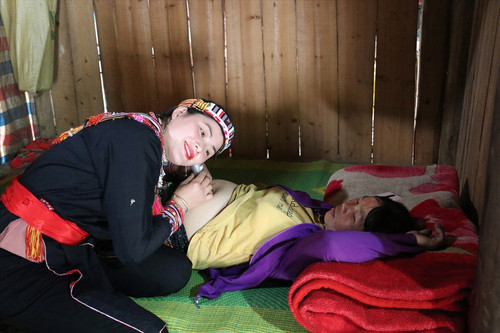
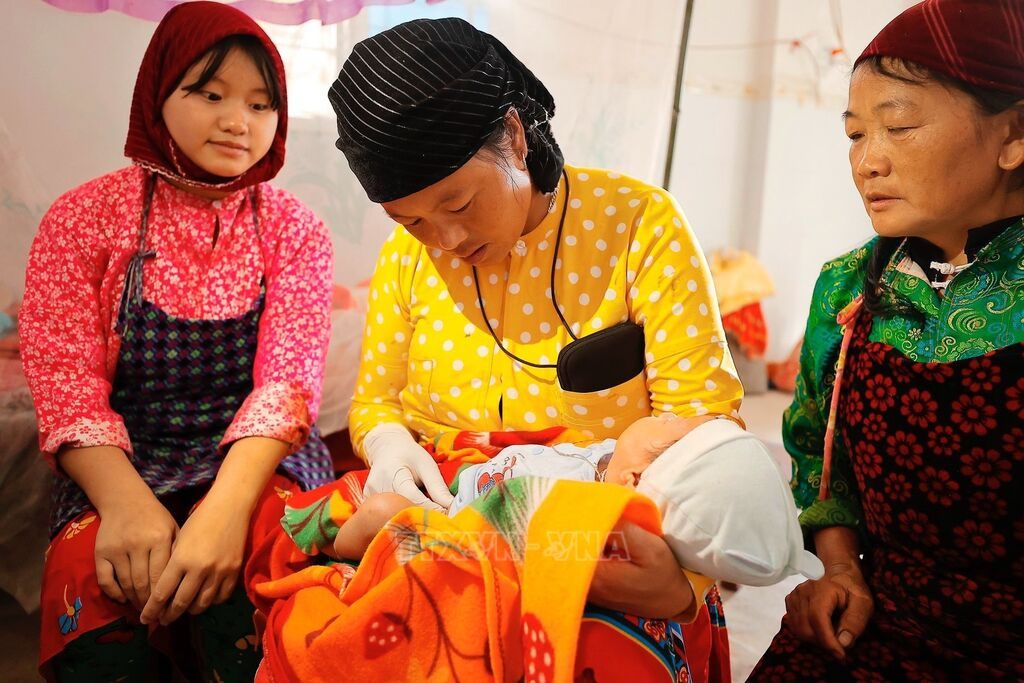
An image of a village 'midwife' performing a prenatal check-up for an expectant mother.
That strength and safety do not come from machinery, but lie entirely in the ancestral experience of midwives, healers, or elderly women in the village. They are entrusted by the community during the most sacred of moments. With calloused hands, a delicate sensitivity to every change in the body, and a treasure trove of invaluable herbal knowledge accumulated over centuries, they accompany the mother through childbirth with remarkable calmness and empathy. As soon as the child lets out their first cry, a postpartum care cycle begins that the modern world out there would have to work hard to learn. From steam baths and washes combined from dozens of types of forest leaves with warming properties like wild ginger, litsea, or wild cinnamon, which help the mother quickly improve blood circulation, contract the uterus, and regain strength after just a few hours; to herbal decoctions for drinking to boost vitality and the technique of using heated medicinal leaves for natural antibacterial and anti-inflammatory protection without the need for synthetic antibiotics.
It is this meticulousness and thoroughness in every herbal remedy, along with the dedication of traditional midwives, that has created a silent yet resilient indigenous healthcare system, sheltering tens of thousands of highland mothers. This is not just a method of healthcare, but a vivid testament to the wisdom of survival and the pure harmony between humans and Mother Nature. In that space, the woman is enveloped by the arms of her loved ones, by the warmth of family and love. That is a solid psychological support that no medical device or protocol can replace.
We, who are always concerned about protecting traditions and swimming against the tide, believe that this is not recklessness. It is absolute trust in a comprehensive healthcare system that has nurtured generations of Vietnamese people to grow up strong amidst the harsh wilderness. It is a place where people trust in Mother Nature, living in pure reliance on the natural world.
If we easily discard traditional customs just because they do not fit modern metrics, we are inadvertently uprooting the values that make up the unique identity of Vietnam's ethnic groups.
Protecting home birth practices does not mean rejecting modern medicine, but is a call for respect, empathy, and dialogue. Instead of imposing one-sided judgments, let us learn to listen to, cherish, and integrate indigenous knowledge into life. Because once the houses are no longer filled with the smoke of the hearth, the traditional herbal remedies are gone, and the peaceful sigh of relief in the stilt house is lost forever, what fades away is not just a birthing habit, but the rustic and proud soul of Vietnamese culture.
Vi Heritage - Respecting indigenous values, securing a sustainable future.
Ready for the journey?