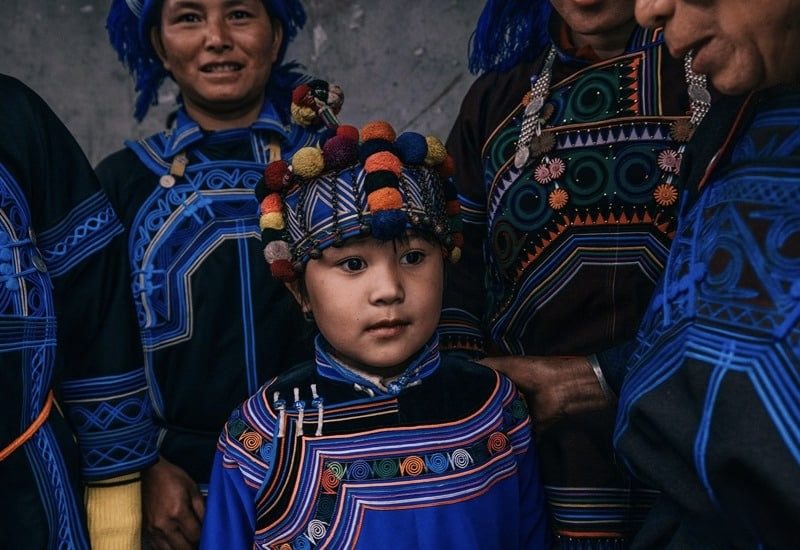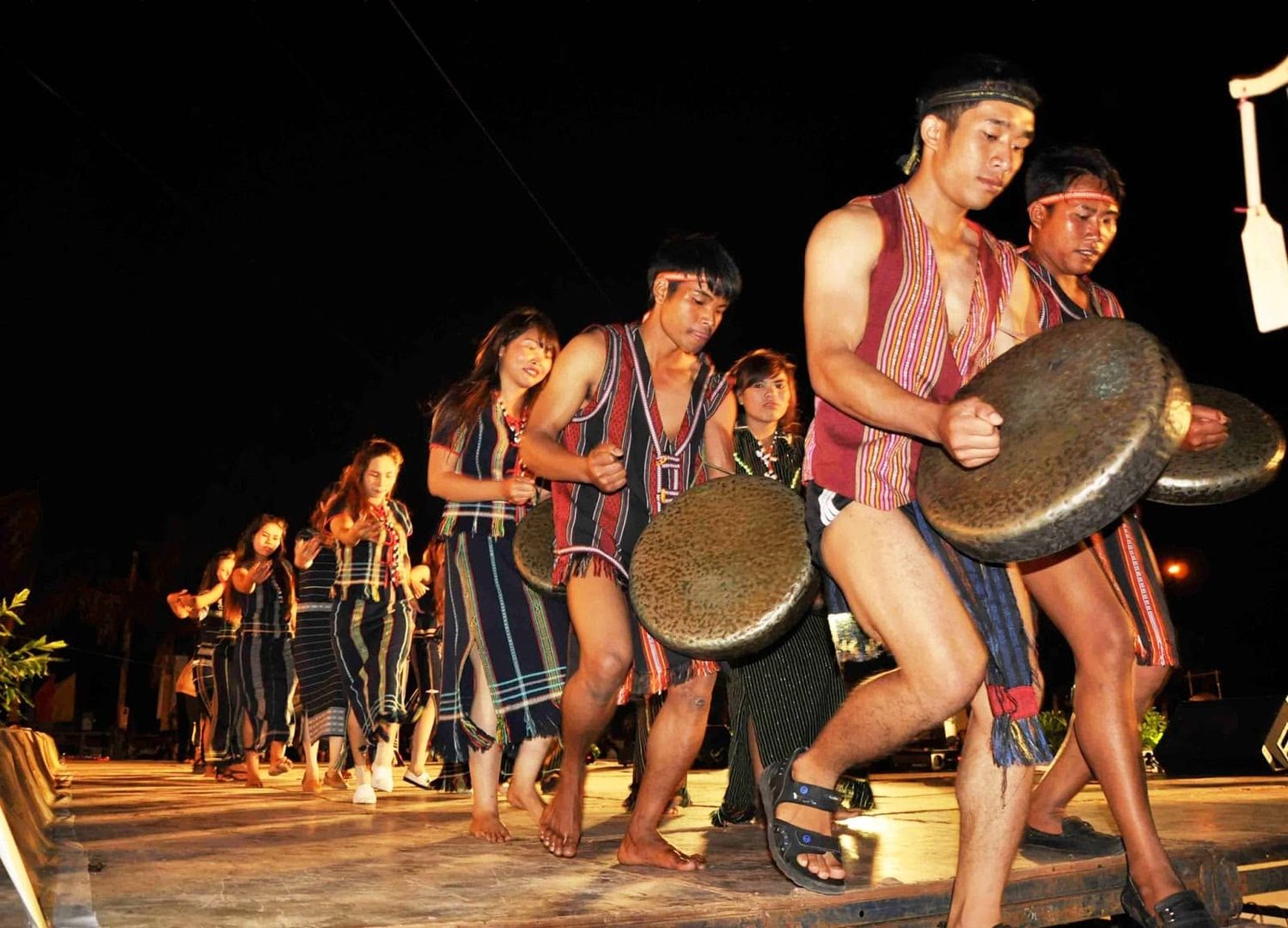
In the beginning, the gongs of the Central Highlands served as a bridge between humanity and the spiritual world. They were the sounds of gongs celebrating the new rice harvest echoing over terraced fields, the somber tones during funeral rites, or the joyful ringing during naming ceremonies for newborns. For the Co-ho people in Lam Dong, gongs are more than just musical instruments. They are symbols of the spirit, the voice of the land, the sky, and the ancestors.
However, time and the rapid pace of urbanization have swept both us and this heritage into new turns and challenges.
In the memories of many, there were periods so difficult that the sound of gongs had to give way to the daily struggle for survival. As shared with deep regret by Mr. Nam, 55, in Lac Duong town: “During the subsidy period, the economy was difficult, and many gongs were lost; due to hardship, people sold their buffaloes and cows, and gongs were also sold; some were even melted down to extract the copper. In the past, when I was working, I even saw people using gongs as pig troughs. When the economy was tough, there was no one with enough money to buy gongs, and their value almost lost its true meaning; people only bought them for the copper. Because of this, gongs gradually disappeared, and their numbers decreased. However, there were a few families who cherished the value of the gongs, so even in poverty, they kept them. The number remaining is very small, so often when people want to play the gongs, they have to buy them from elsewhere, but this is rare, if not to say it no longer happens.”.
Statistics from various periods have also sounded an alarming wake-up call regarding the “bleeding” of gongs, as thousands of rare sets vanished from villages, causing the space for community life to shrink.
Fortunately, the vitality of indigenous culture always finds a way to adapt so it is not forgotten. In the trend of integration and tourism development, the sound of Lam Dong gongs today has entered a new chapter—a chapter that is more open, more accessible, and carries the mission of connecting travelers from all over.
Coming to Lac Duong or Ta Nung, Da Lat in recent years, visitors can easily encounter captivating cultural experiences. A cozy meal with crispy grilled hill chicken, fragrant sticky rice in bamboo tubes, and warm, flavorful jar wine, all harmonized with the ringing of gongs beside a flickering fire. A cultural official in Lac Duong town shared that gong troupes no longer just perform within families and villages but have expanded their space to welcome domestic and international tourists. Incorporating gongs into tourism not only helps indigenous people increase their income and improve their lives, but more importantly, it creates a natural stage for the heritage to live and resonate with heroic melodies instead of lying silent in museums.
Nevertheless, the challenge of balancing commercialization with original preservation remains a constant concern for the Vi Heritage team—those deeply devoted to the culture of the Central Highlands. When gongs are played to serve tourists, without maintaining standards, it is easy to lead to hybridization, fading the sacred soul of the mountains and forests.
For the fire of the great mountains to be passed down through generations, the answer lies nowhere else but in the persistent cooperation of the community and local authorities through practical steps. First and foremost is nurturing the next generation, where gong-teaching classes organized by elderly artisans in collaboration with the cultural sector in villages become a bridge connecting the past with the present, helping today's generation understand that gongs are not just for performance, but a journey back to find the roots of their people.
Parallel to this is the mindset of responsible tourism. Vi Heritage works alongside the community to create cultural tourism spaces in Da Lat, where standardizing performance venues, strictly respecting the originality of rituals, and enhancing authentic experiences for visitors are the golden keys to ensuring that heritage values spread in a lasting and sustainable way.
For the Vi Heritage team, culture is not a silent museum, but a flow that constantly changes to adapt to the times. Although the gong cultural space of Lam Dong has taken on a new, more modern appearance in the rhythm of international integration, deep within each beat of the gongs, the character and identity of the Co-ho people remain a powerful, intact pulse in the heart of the Lam Vien highlands.
Ready for the journey?