Vietnamese people have long valued rituals and moral principles. When it comes to rituals, gratitude and righteousness remain at the core.
Ancestors gave birth to grandparents, grandparents to parents, and parents to us. A filial child not only feels gratitude for the gift of life from their parents but also extends that reverence to their grandparents and ancestors, the deep roots of each of us.
In the folk consciousness, through worship, the invisible and visible worlds are always in close contact, creating a sacred meeting place between humans and the divine universe. For the ancient Vietnamese, death was never the end. Though the body may perish, the soul is immortal and continues to visit and look after the family. With the belief that "as it is in the world of the living, so it is in the world of the dead", whatever the living need and however they live, those in the afterlife have a similar life, from eating and spending to housing. The firm belief that the spirits of grandparents and parents always reside on the altar to stay close, watch over, and protect their descendants has become a profound spiritual anchor. Many people, fearing that their ancestors might be saddened or ashamed, always discipline themselves to avoid evil and think carefully before every action to fully uphold their filial duty.
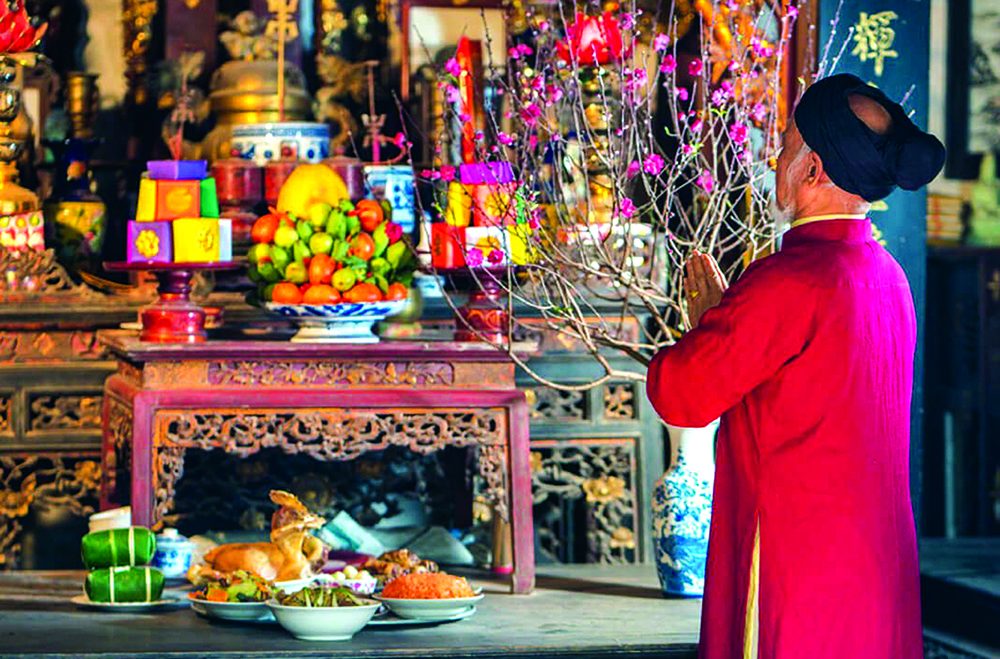
On the first day (soc) and the full moon day (vong) of each lunar month, the act of the homeowner lighting a fragrant incense stick and offering a cup of clean water or a plate of fresh fruit is a warm moment of communion between the two worlds.
Not limited to the first and full moon days or death anniversaries, whenever any major or minor event occurs in the house, the homeowner respectfully informs the ancestors. From everyday matters like selling a litter of pigs, a child suddenly falling ill in the middle of the night, facing business losses or lawsuits, to great joys like a wife giving birth, children going to school, passing exams, getting married, or building a new house, everything is reported before the altar to speak with grandparents and ancestors. This is when descendants express their gratitude for being blessed and protected, while also praying for shelter against life's misfortunes and calamities. Depending on the circumstances, the offerings may just be a plate of sticky rice, a bunch of bananas, a cup of wine, or a plate of fresh fruit, because the most important thing remains the sincere and earnest heart of the descendants. Frequent worship and remembering one's roots is the way for people to fully uphold the moral principle of "when drinking water, remember its source," finding peace and a solid anchor for the soul amidst the fluctuations of life.
In reality, ancestor worship is not an independent religion in the sense of having a system of dogmas or the participation of clergy. It stems entirely from the reverence, gratitude, and filial affection of descendants toward the deceased. Even for fellow citizens who are Catholic, although they did not traditionally set up ancestor altars in the past, they have always maintained filial piety by preparing meals and praying on death anniversaries, viewing this as a shift of their reverence to the altar of God. Notably, since 1968, the Vatican has officially permitted Catholics to set up ancestor altars like any other Vietnamese family, affirming that the flow of filial piety is a common thread connecting all Vietnamese souls.
Serving one's ancestors is an expression of reverence, because "a tree only sprouts green branches and leaves when it has roots, and a river only becomes a vast sea when it has a source", and humans must have ancestors to be present in this world.
Amidst the hustle and bustle of the modern era, when traditional values are sometimes swept away by daily worries, maintaining the lighting of incense on the first and full moon days is not merely a spiritual habit, but an anchor that keeps each person's soul peaceful amidst the storms.
At Vi Heritage, we believe that cherishing and nurturing those simple daily routines is the most practical way to preserve the national soul, respect indigenous values, and help us secure a sustainable future from the roots of the past.
Ready for the journey?