Ka-Tu villages are typically located in high-altitude areas, far from valley floors where stifling heat and malaria are common.
Villages are situated on peaks or perched on hillsides near water sources or streams. Access to the villages is always difficult; the steep, rugged slopes feel like walking in place due to the slippery mud, even during light rain. In the Sau outpost area, the more significant villages are surrounded by old fields where grass has sometimes grown and many sugar palms surround them, making the landscape more beautiful than the villages in Ben-Hien, which disappear into deep forests or are nestled among dense, scrubby woodlands.
The houses are built in the stilt style, entirely of wood and bamboo, with palm-leaf roofs that slope so low that one must crawl to enter. In the center is a large main pillar (tanal) 5m to 6m high; depending on the importance of the house, it has an oval shape. On top of the main pillar, a long ridgepole is placed, against which the rafters rest, forming a flat surface connected to the smaller pillars surrounding it. All these wooden pieces are stripped of bark and carefully rounded. A small wall of woven bamboo, 1.0m to 1.5m high, encloses the house, continuing with panels from the floor up to the roof. On the outside, the roof is held and protected against gales by long logs woven together into an elegant curve at the ridge. At each corner of the roof, carved wooden pieces (takai) are placed; they take the stylized forms of animals, human figures, or sometimes simple phallic idols. Inside, a flat wooden board, perhaps 0.5m high and bent by fire to fit the oval shape of the house, is sometimes covered with dense drawings: hunting or fishing scenes, sacred animals, geometric shapes, and strange symbols. Two doors push open symmetrically. There is no furniture in the house, but there are a few jars—some very old—containing rice or fermented mash with a sour smell, along with gongs, cymbals, and bamboo tubes full of water.
On the floor, two earthen hearths are always smoky from half-burnt firewood; above them, a rack serves to store firewood and block flying sparks. Hanging from the roof are bundles of corn, fishing nets, and animal traps. Cooking utensils consist of two or three bronze pots, aluminum bowls, and rough earthenware plates and bowls. Smoke clings to all these items, forming a black, glossy coating.
Ka-Tu houses are relatively clean and comfortable. Many times, after a long journey, soaked to the bone, we (my soldiers and I) would rush into these hospitable homes. The head of the household would poke the crackling, cheerful fire, women would chatter as they carried long bamboo tubes to fetch stream water, and pigs and chickens under the floorboards would make lovely, noisy sounds... a sign of a hearty, complete, and comfortable meal.
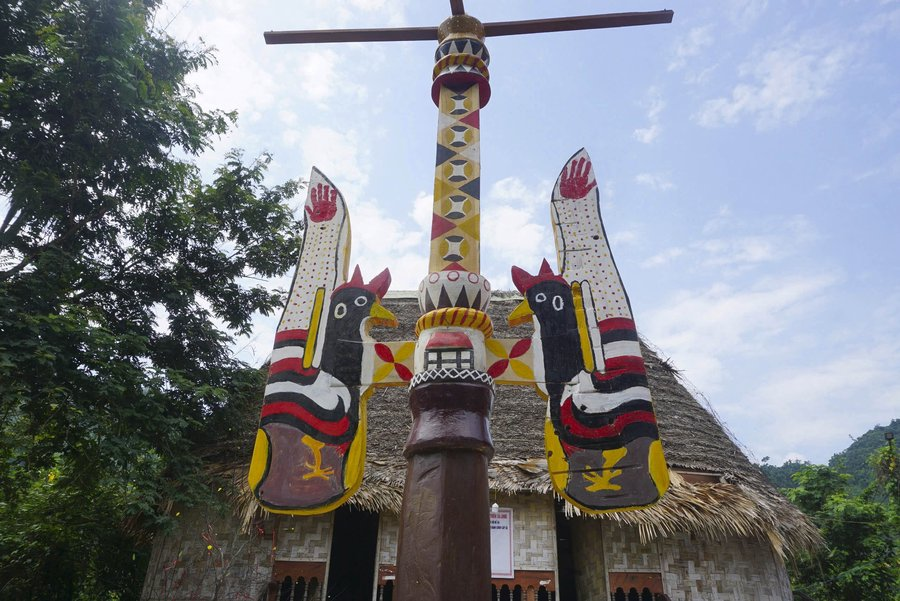
Typically, Ka-Tu houses are arranged in a circle around a wide space where, in the center, a sacrificial pole (sinur) stands tall. These poles are carved; on each side, two wooden pieces decorated with drawings form two wings, usually attached only during festivals. At the top of the pole, a horizontal cross is placed. During many expeditions into the Ka-Tu territory, Mr. SAINT-PERON, chief of the native guard in Faifoo, collected and recorded the drawings on the sacrificial poles or inside the Guol houses. One often encounters geometric shapes, the meanings of which we do not know; one also frequently sees drawings of sacred animals—chickens, t'ring birds, fish, snakes, lizards, turtles—as well as crosses, the sun, and stars. The drawings are executed in three colors: black from soot, red from rice husks, and white from lime. Hypotheses about the sacrificial poles are diverse, but in my opinion, in the very distant past, these buffalo-stabbing sacrificial poles were used for human sacrifice and featured stylized phallic forms.
In large villages, which can have up to 50 houses, the communal house occupies the central position. Every Ka-Tu village has a communal house, the Guol. The Guol is built through the contributions of families, with everyone in the village participating in its construction. It is a place for council meetings and a residence for the youth and the elderly. Women are not allowed to enter. This is also a sacred place where the spirits of ancestors reside if they had a peaceful death (a 'good death'). The tranquility of the Guol cannot be disturbed by any arguments or battles, and strangers, even enemies, can rest peacefully under its roof. The Guol is always built meticulously and follows the same design as other houses, but it often reaches very large dimensions; more than 100 of us once slept in the Guol at A-Ro, and we felt very comfortable inside. The central pillar is sometimes up to 12m high, and its position is reserved for holding major ceremonies. The wooden beams connecting the surrounding pillars, as well as the wooden planks used as walls, are always decorated with drawings similar to those on the buffalo-stabbing sacrificial poles (sinur), or depicting hunting and fishing scenes, or family scenes from Ka-Tu life. Inside the house,
the Guol is covered with buffalo heads—sacred animals—as well as the heads of deer, mountain goats, musk rats, squirrels, marten tails, peacock feathers, pheasant feathers, junglefowl feathers, and t'ring bird heads. All these trophies are hung in a cluttered manner and covered in the smoke constantly rising from the hearths. There can be from two to ten hearths in each Guol, but the number must always be even. According to Ka-Tu belief, animals also have a soul that lingers around the Guol where their skulls are hung, thus attracting their herds (of which they were a part when alive) to the village. Regarding this mysterious custom, it is probably not bold to hypothesize that in the past, the skulls hung in the Guol were human skulls. Headhunters in the Philippines, Borneo, and New Guinea do the same, and the similarity between these tribes and the Ka-Tu is truly strange. Upon reading this, we see many similarities.
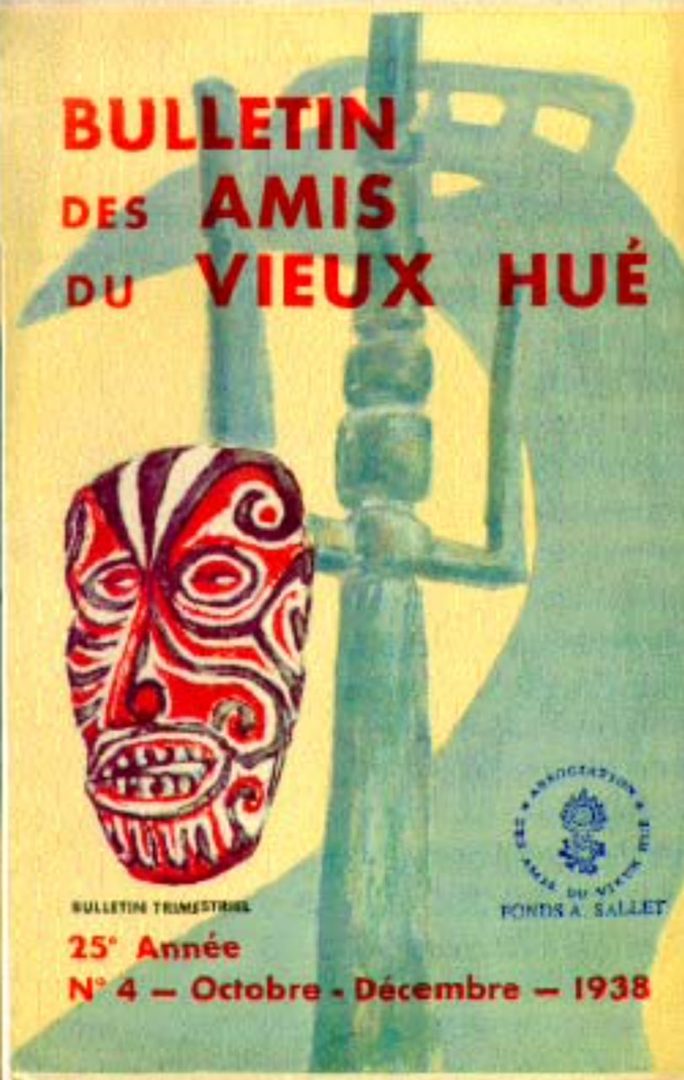
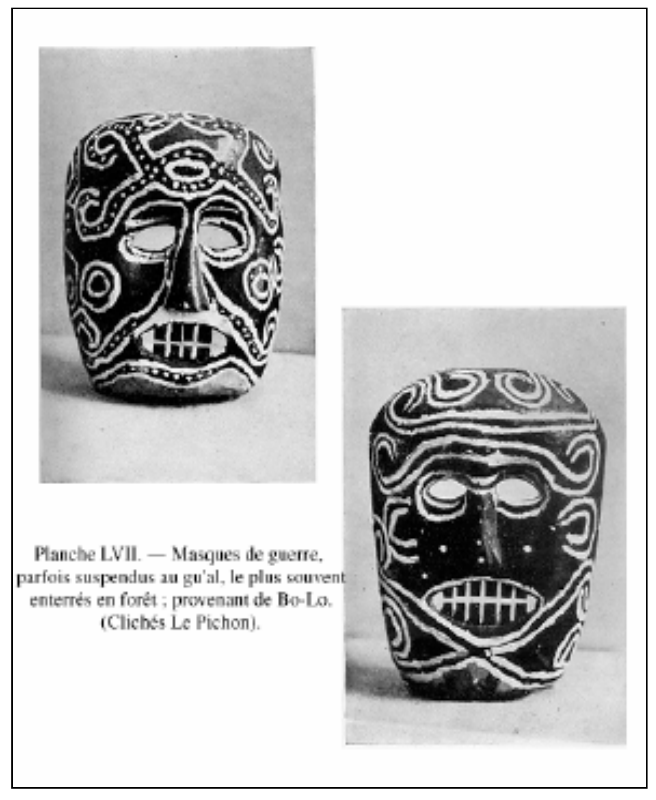
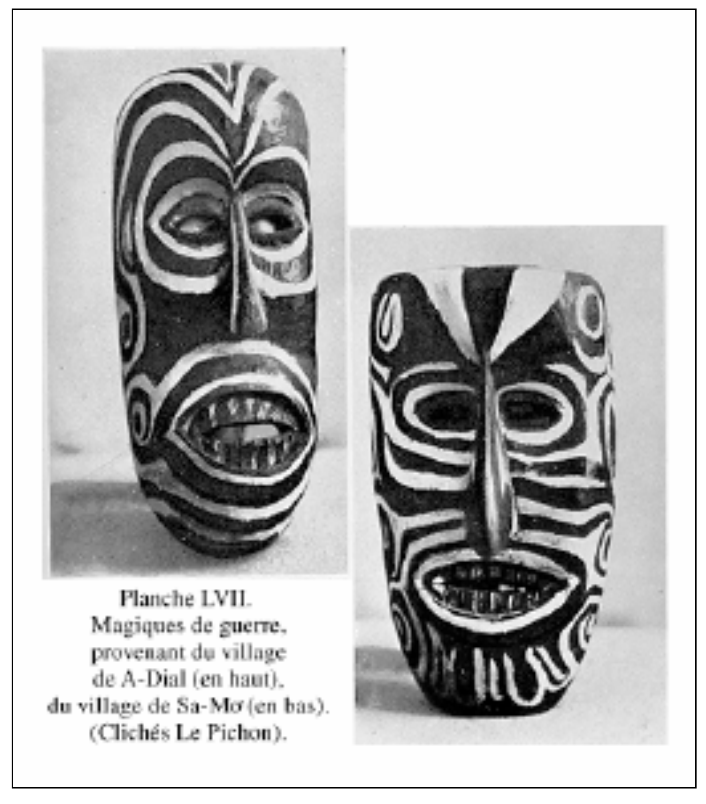
In some villages, one also encounters human masks hanging on the walls of the Guol. These masks have grimacing faces and are made of light wood. The Ta-Ka in Bo-lo once told me: "Those are battle masks." I could never learn anything more about this.
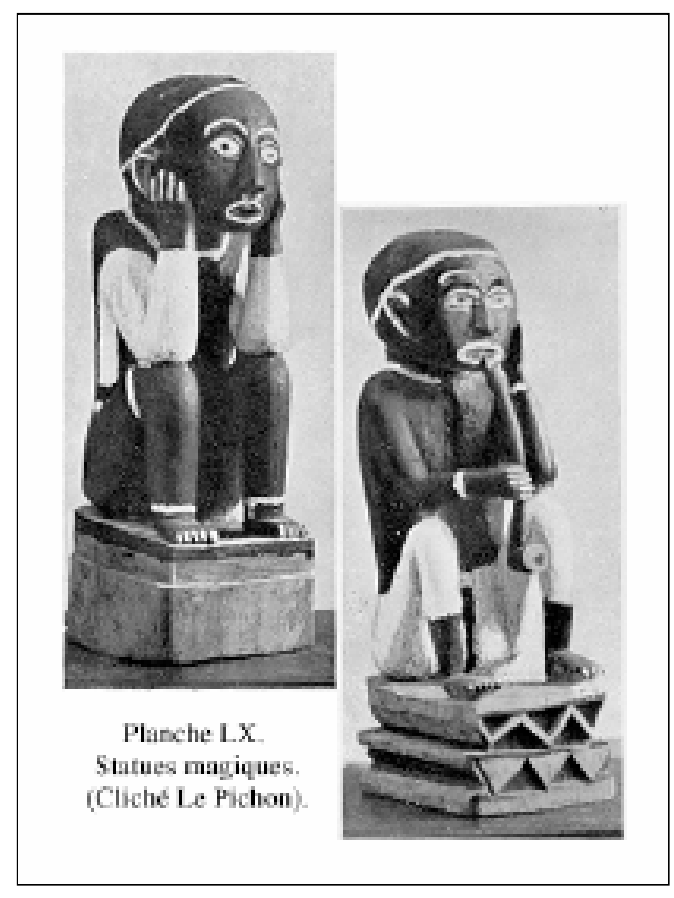
Often, one encounters by the side of a trail, in the deep forest, or in the middle of some fields, a statue placed there to intimidate the abui or evil spirits: crude human figures with oversized faces reminiscent of Easter Island, or a padil yayah (dancing woman), or a monui bok-bok (person smoking a pipe), or a character sitting in a squatting position, chin resting on knees, hands clutching the head.
But the main works of the Ka-Tu are their tombs and coffins. They are decorated with extremely diverse stylized drawings and carvings; each piece has its own personality, and the patterns never repeat.
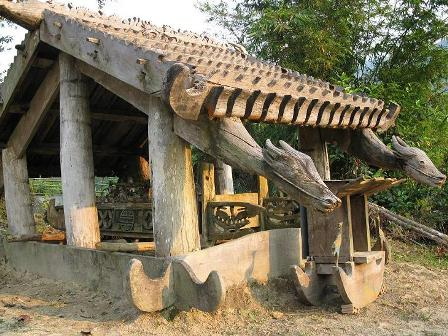
This Ka-Tu art can only originate from a relatively advanced civilization whose remnants will disappear if we do not intervene to save them. The elegance of the bodies and faces of some individuals also suggests a race in decline rather than a primitive one. If the Ka-Tu territory is rugged, difficult to enter due to malaria and treacherous terrain, it still has a chance to survive as the final refuge for ethnic groups chased away by all generations of Indochinese inhabitants. If we assume the Negroid inhabitants, who certainly preceded the Austronesians, are also found here in many villages, it is also certain that an artistic culture surely developed here in past centuries, safe from human invasions—a culture that a simple spread of an epidemic, such as typhus or smallpox, could wipe out, killing off neighboring 'Moi' tribes.
Ready for the journey?