A study from the Platform Sutra and the history of Lingnan
VI HERITAGE | BUDDHIST STUDIES AND HISTORY RESEARCH
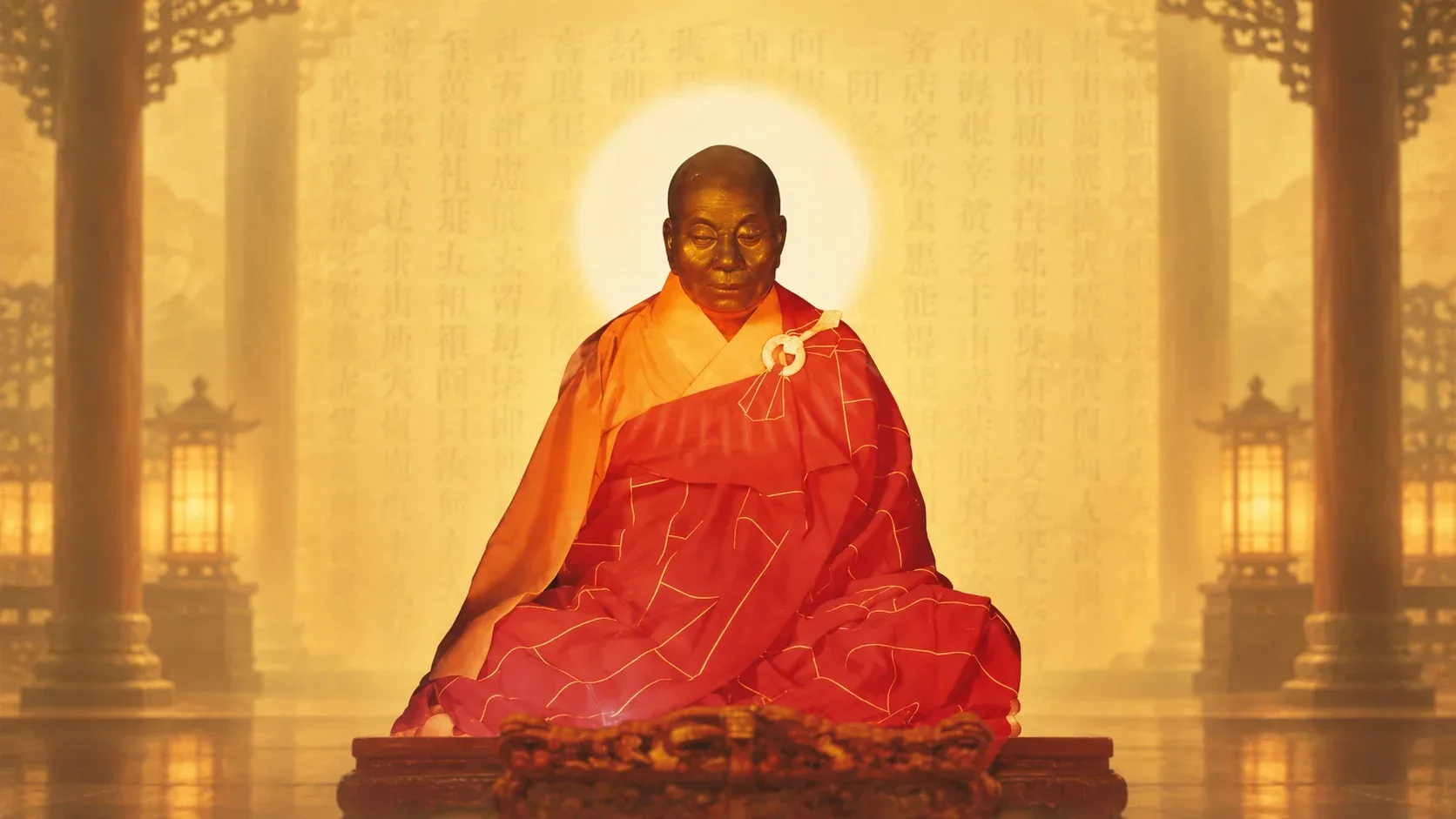
The Sixth Patriarch Huineng (638–713), the sixth patriarch of the Chan (Zen) school according to tradition, has long been revered as a great enlightened master with a profound influence on East Asian Buddhist thought. However, a topic rarely fully explored in popular articles is his origin. Was the Sixth Patriarch Huineng Vietnamese, or more precisely, did he come from the land of Annam during the Tang Dynasty? This question was once raised by the Most Venerable Thich Man Giac in a notable treatise. Returning to the Platform Sutra, Buddhist texts, and ancient gazetteers can help to better identify what historical records note, as well as the limitations of hypotheses regarding the background of this Zen master.
I. The Sixth Patriarch Huineng in the flow of Chan history
In the history of Mahayana Buddhism, the Sixth Patriarch Huineng holds a special position. The Chan philosophy associated with him, highlighted by the spirit of sudden enlightenment, direct perception of one's own nature, and non-attachment to forms, has become one of the important foundations of East Asian Chan Buddhism.
According to the biography recorded in the Platform Sutra, Huineng came from a poor family in the South. In his youth, his father passed away early, and he lived in poverty with his mother, often selling firewood to support himself.
Upon hearing a customer reciting the Diamond Sutra, Huineng developed faith and sought out the Fifth Patriarch Hongren in Huangmei to study. The story of the transmission of the robe and bowl between Hongren and Huineng later became one of the most widely known tales in the Chan tradition. However, from the perspective of historical research, Huineng's life story was not a fully recorded biography during his lifetime.
The texts regarding his life, teachings, and lineage underwent many compilations, revisions, and developments. In particular, from the 8th century onwards, the efforts of the Chan master Shenhui contributed significantly to the process of establishing Huineng as the sixth patriarch in the history of the Chan lineage.
Researcher John Jorgensen, in his work Huineng published in 2021, emphasizes that the image of Huineng in the Chan tradition contains later layers of religious and historical construction. This necessitates distinguishing the historical figure from the patriarch image revered through many generations. [1]
This distinction is not intended to deny the value of the scriptures or the Chan tradition. On the contrary, it is necessary for researchers to approach the literature with a spirit of respect, while not turning details belonging to religious tradition into historical conclusions without sufficient evidence.
It is from this method that the question of the Sixth Patriarch Huineng's hometown needs to be re-examined in ancient source materials.
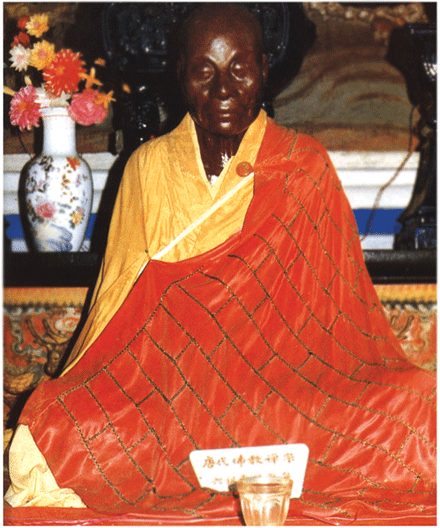
II. What does the Platform Sutra record about the Sixth Patriarch Huineng's hometown?
One of the most important sources for studying Huineng's life is the version of the Platform Sutra belonging to the Dunhuang manuscript collection.
The discovery of the Buddhist library at Dunhuang in the early 20th century opened a new phase in the study of Chan history. The ancient versions preserved there allow scholars to compare layers of text before they were edited into the common versions of the sutra later on.
In the Dunhuang version, the dialogue between Huineng and the Fifth Patriarch Hongren contains a particularly noteworthy detail.
When asked where he came from, Huineng replied:
「弟子是嶺南人,新州百姓」
This disciple is a person of Lingnan, from Xinzhou.
This is one of the most direct sentences regarding the issue of his origin. The two place names mentioned need to be distinguished. Lingnan (嶺南) is the name of a vast geographical region south of the Five Ridges (Wuling), while Xinzhou (新州) is a specific administrative unit.
Thus, the sutra does not only say Huineng came from the South, but also names a specific locality, Xinzhou. This has fundamental significance in historical verification. If one relies only on the two words 'Lingnan' to infer his hometown, researchers risk overlooking the specific place name recorded in the text.
More notably, when Hongren used derogatory language about people from the South to question his ability to attain Buddhahood, Huineng replied:
「人即有南北,佛性即無南北」
People may have North and South, but the Buddha-nature has no North or South.
This is a response with profound doctrinal significance.
In the spirit of Mahayana Buddhism, the Buddha-nature is not limited by race, social status, background, or place of residence. People in the South, even if considered to be from a region far from the cultural center, are still equal in their capacity for enlightenment.
However, one should not equate doctrinal meaning with evidence of ethnicity. The appearance of a derogatory term for the inhabitants of Lingnan may reflect regional prejudices in the society of that time. But the term itself does not prove that Huineng belonged to the Vietnamese community or was born on the territory of Annam.
These are two different issues: one belongs to the history of thought and language, the other to the verification of hometown and the origin of the resident community.
Reference source: Platform Sutra, Taisho Tripitaka, T48, No. 2007; Dunhuang revised edition, Chapter III. [2][3]
III. Lingnan, Xinzhou, and Annam in the historical geography of the Tang Dynasty
To understand the origin of the Sixth Patriarch Huineng, one cannot just examine the scriptures while ignoring the historical and geographical context of the 7th century.
Lingnan is a vast space south of the Five Ridges, including areas corresponding to modern-day Guangdong, Guangxi, and surrounding regions under various geographical and administrative divisions.
In ancient history, this space was once associated with many Baiyue communities, while also being influenced by processes of migration, trade, and political changes spanning many dynasties.
Therefore, the history of Lingnan cannot be viewed merely as a uniform cultural space. However, it is also necessary to distinguish cultural geography from the administrative boundaries of each period. During the Tang Dynasty, the Lingnan Circuit was a large administrative area. Jiaozhou and later the Annam Protectorate once had a subordinate relationship within the Lingnan management system.
According to the research The Annan Protectorate in Northern Vietnam during the Tang Period (679–907) by Vi An Lu, published on Journal of the Royal Asiatic Society in 2025, the Annam Protectorate was established in 679, based on the transformation of the previous Jiaozhou governing institutions.
In some periods, Annam belonged to the Lingnan administrative system of the Tang Dynasty. [4] This shows that Lingnan and Annam had a practical historical relationship, but they are not identical place names. A person called a 'person of Lingnan' was not necessarily born in Jiaozhou or Annam. The issue becomes even clearer when comparing the place name Xinzhou in the Platform Sutra.
According to the historical geographical data of the China Historical GIS, based on Old Book of Tang and New Book of Tang, Tan Chau (Xinzhou) was established in 621 during the Tang Dynasty, changed to Xinxing Prefecture in 742, and reverted to the name Tan Chau in 758. The administrative seat of Xinxing Prefecture was located in Xinxing County, within the territory of present-day Guangdong province. [5]
This is an important piece of evidence.
If the text of the Platform Sutra of the Sixth Patriarch identifies Huineng as a native of Tan Chau, and Tang-era gazetteers place Tan Chau in the Guangdong region, then the hypothesis that he was born in An Nam requires an independent source of information capable of explaining this discrepancy. To date, among the documents surveyed, there is no direct evidence to confirm that the Tan Chau mentioned in the Platform Sutra is a locality belonging to Giao Chau.
On the other hand, it should be noted that Huineng is traditionally recorded as having been born in 638, while the designation An Nam Protectorate officially appeared only in 679. Therefore, using the concept of An Nam to refer to Huineng's hometown requires caution regarding chronology.
From the above evidence, identifying his hometown in the Tan Chau region, Lingnan, corresponding to the area of present-day Guangdong, has a clearer historical and geographical basis than the hypothesis placing that hometown in Northern Vietnam. However, administrative origin does not automatically resolve the entire issue of a historical figure's ethnic background.
That is a question requiring other types of evidence, especially regarding family background, language, and the resident community.
IV. The Hypothesis of the Sixth Patriarch Huineng as a Vietnamese by Most Venerable Thich Man Giac
In the history of research and interpretation of Zen Buddhism in Vietnam, Most Venerable Thich Man Giac is one of the scholars who raised the issue of the ethnic origin of the Sixth Patriarch Huineng.
In an essay titled The Sixth Patriarch Huineng is Vietnamese, the Most Venerable offers a different reading of the data in the Platform Sutra of the Sixth Patriarch, especially the Dunhuang manuscript. [6]
The Most Venerable's argument is not based solely on a single place name, but also relates to the history of the ancient Vietnamese people, the status of the Lingnan inhabitants, Huineng's social status, and the connections between Zen Buddhism and Vietnamese Buddhism.
First of all, the Most Venerable emphasizes that Lingnan once had deep relations with the history of ancient Vietnamese communities. From this perspective, he raises the question of whether Huineng's background might have been interpreted in a way that attributed him to the history of Chinese Buddhism later on.
Next, the Most Venerable notes that Huineng was illiterate, came from a poor background, and was called by Hongren with a derogatory term for Southerners.
These details, according to the Most Venerable's interpretation, could reflect the non-Han origin of the Zen master. Notably, the Most Venerable also proposes a hypothesis about the period Huineng spent in seclusion after receiving the robe and dharma. Accordingly, he may have returned to the land of Vietnam during the period before he publicly propagated the dharma. Another line of reasoning is based on the presence of temples, ancestral sites, and Zen traditions related to the Sixth Patriarch in Vietnam.
These observations show a remarkable effort to re-read the history of Zen Buddhism from the cultural space of the South, rather than relying solely on the lineage system recorded in Chinese texts. However, from the perspective of historical verification, it is necessary to distinguish historical possibility from confirmed events. The fact that Lingnan once belonged to the cultural space of many ancient Vietnamese communities does not mean that the entire Lingnan of the 7th century was An Nam.
The fact that Huineng was illiterate, or was called by a derogatory term, is also not enough to prove that he belonged to a specific ethnic group. Similarly, the period of seclusion that is not fully recorded cannot automatically become evidence that he returned to Giao Chau. Regarding the ancestral temples worshiping the Sixth Patriarch on Vietnamese soil, the presence of beliefs and worship traditions is an important piece of data regarding the history of reception. However, to prove a direct connection to Huineng's life, it is necessary to determine the date of establishment, the origin of the monastery, and independent documents.
Therefore, the hypothesis of Most Venerable Thich Man Giac should be viewed as a thesis with suggestive value, raising issues worthy of further research, but it is not yet sufficient to become a formal conclusion about the Sixth Patriarch's hometown. Respecting a hypothesis does not necessarily mean accepting all of its conclusions. In the spirit of Buddhist studies, respect for predecessors must go hand in hand with the responsibility of verifying documents and caution in establishing historical knowledge.
V. From the Sixth Patriarch's Background to the Issue of Forming the Zen Tradition
Another important aspect to note is the formation of the image of the Sixth Patriarch in the history of Buddhism.
Modern studies show that the Zen lineage was not only transmitted through practice and teaching, but also recorded, established, and interpreted through many different types of texts.
Inscriptions, biographies of monks, and transmission records all play an important role in that process.
An early epitaph composed by Wang Wei about Huineng does not clearly state his hometown in the specific manner of later biographies of monks. Meanwhile, the Biographies of Eminent Monks of the Song Dynasty, compiled at the end of the 10th century, presents more details about his lineage, father, and life.
Wen Sun's research published in 2026 on Tang Dynasty Buddhist inscriptions also clarifies the role of memorial texts in establishing religious identity and lineages. [7]
The difference between these sources raises a methodological issue.
A text compiled close to the character's era usually has special value, but not every detail in it is automatically accurate. Conversely, a later biography of monks may preserve old traditions, but it needs to be cross-referenced with independent sources. For Huineng, what we know about his life is closely tied to the development of Zen Buddhism over many generations. Therefore, one cannot rely solely on a gap in a genealogy or a textual discrepancy to confirm ethnic origin.
Nor can the failure to find evidence be seen as absolute proof denying all other possibilities. Historical verification requires distinguishing between what is recorded, what can be inferred, and what remains in the realm of hypothesis.
VI. Huineng and the Connection with Vietnamese Zen Buddhism
Although the issue of his hometown cannot be concluded according to the An Nam hypothesis, the influence of Huineng's thought on Vietnamese Buddhism remains a topic with independent research value.
Giao Chau has long been located on the exchange routes between Buddhist centers in India, Southeast Asia, and East Asia.
Through the activities of monks, the circulation of scriptures, and cultural and political transformations, Buddhism in the land of Vietnam has absorbed various ideological traditions.
According to the Vietnamese Zen tradition, Zen Master Vô Ngôn Thông arrived in Giao Châu in 820 and practiced at Kiến Sơ Pagoda. The Vô Ngôn Thông Zen lineage is placed within a transmission system connected to Bách Trượng Hoài Hải and Mã Tổ Đạo Nhất, figures belonging to a dharma lineage that the Zen tradition traces back to the Sixth Patriarch Huệ Năng.
However, these records were largely preserved through later edited works, especially Thiền Uyển Tập Anh. In the work Zen in Medieval Vietnam: A Study and Translation of the Thiền Uyển Tập Anh, scholar Cuong Tu Nguyen researched the formation and recording process of Zen traditions in medieval Vietnam. [8]
From that perspective, the history of Vietnamese Zen is not only the history of receiving external dharma lineages but also the history of monastic communities on Vietnamese soil creating, preserving, and interpreting their own traditions. In particular, ideas associated with Huệ Năng, such as directly perceiving one's own nature, eliminating attachments, and not distinguishing between individuals based on background or status, have become important elements in the East Asian Zen tradition.
The fact that these ideas were received and promoted in the life of Vietnamese Buddhism is part of the history of cultural exchange, regardless of whether Huệ Năng was born on Vietnamese territory or not. The legacy of a Zen master is defined not only by their birthplace but also by the path of the dharma transmitted through generations.
From here, the study of Huệ Năng can expand to a more meaningful question: how was the Tào Khê ideology received, interpreted, and transformed in the history of Vietnamese Buddhism?
This is a research direction that requires a combination of scriptures, stele inscriptions, local gazetteers, monastic historical records, and surviving Zen works.
VII. Was the Sixth Patriarch Huệ Năng Vietnamese? Assessment based on existing evidence
Returning to the initial question, it can be seen that the sources currently being examined do not provide enough evidence to confirm that the Sixth Patriarch Huệ Năng was Annamese or born in the land of present-day Vietnam.
The Platform Sutra of the Sixth Patriarch (Dunhuang manuscript) records Huệ Năng as a person from Lingnan, a resident of Xinzhou. Historical geography documents from the Tang Dynasty place Xinzhou in the region corresponding to present-day Guangdong. Meanwhile, An Nam and Giao Châu were administrative units with defined scopes, even though they were once part of the Lingnan administrative system.
These facts do not allow for the identification of Huệ Năng's hometown with An Nam.
Regarding the issue of ethnic origin, existing textual sources are also insufficient to definitively determine that he belonged to a specific ethnic community according to modern classifications. The thesis of Most Venerable Thích Mãn Giác therefore needs to be further evaluated by comparing different versions of the Platform Sutra, Tang Dynasty gazetteers, inscriptions, biographies of monks, and relevant Vietnamese Buddhist materials.
Although that hypothesis cannot yet be confirmed, re-asking the question about Huệ Năng's origin still opens up a broader approach to the history of Buddhism in the Lingnan – Giao Châu space. It is a history of exchange between resident communities, of routes for the dissemination of scriptures, of the formation of dharma lineages, and of the process of receiving the dharma across geographical boundaries.
VIII. Conclusion: Buddha-nature has no North or South
The dialogue between Huệ Năng and Hongren in the Platform Sutra of the Sixth Patriarch is perhaps a profound hint for approaching the issue of his birthplace.
People may have North and South, but Buddha-nature has no North or South.
Historically, hometown, lineage, and community of origin are issues that can be researched through literature and specific evidence. But in terms of Buddhist studies, the value of Huệ Năng's thought is not limited by those distinctions. A Zen master may appear in a certain geographical space, but the dharma is transmitted through the practice and enlightenment of many generations in many different lands.
Therefore, exploring the relationship between Huệ Năng and Vietnamese Buddhism does not necessarily have to start or end with the question of which ethnic group he belonged to. Equally important is identifying the paths through which ideas, scriptures, and Zen traditions have been present, developed, and left their mark on Vietnamese cultural life.
With that spirit, research into Buddhist heritage needs to maintain two qualities simultaneously: reverence for predecessors and honesty regarding historical sources.
Because heritage is not just what we wish to receive about our past, but first and foremost, values that need to be understood, preserved, and passed on based on the truth.
References
[1] John Jorgensen (2021), Huineng, Oxford Research Encyclopedia of Religion, Oxford University Press.
[2] Platform Sutra of the Sixth Patriarch, Dunhuang manuscript, Taishō Shinshū Daizōkyō, T48, no. 2007. Chinese text comparison at CBETA.
[3] Zhang Lei (張磊) and research team, Annotated Interpretation of the Dunhuang Platform Sutra, Chapter III. Refer to sections §03.03–§03.07.
[4] Vi An Lu (2025), The Annan Protectorate in Northern Vietnam during the Tang Period (679–907), Journal of the Royal Asiatic Society, 35(3), tr. 657–677.
[5] China Historical GIS, Xinxing Prefecture (新興郡), Tang Dynasty gazetteer. Reference data from Old Book of Tang, volume 41 and New Book of Tang, volume 43.
[6] Most Venerable Thích Mãn Giác, The Sixth Patriarch Huineng was Vietnamese. A study on the Dunhuang version of the Platform Sutra of the Sixth Patriarch, republished on Phatgiao.org.vn.
[7] Wen Sun (2026), Identity, Belief, and Texts: Buddhist Lineages in Tang China's Stūpa Inscriptions, Sungkyun Journal of East Asian Studies, 26(1), tr. 29–57.
[8] Cuong Tu Nguyen (1997), Zen in Medieval Vietnam: A Study and Translation of the Thiền Uyển Tập Anh, University of Hawai‘i Press.
Vi Heritage – Researching, preserving, and connecting the cultural, historical, and heritage values of Vietnam.
Editor's note: This article is a comprehensive study based on published literary sources and academic works. Hypotheses lacking sufficient evidence are presented in accordance with the nature of research and are not to be considered confirmed historical conclusions.
Ready for the journey?