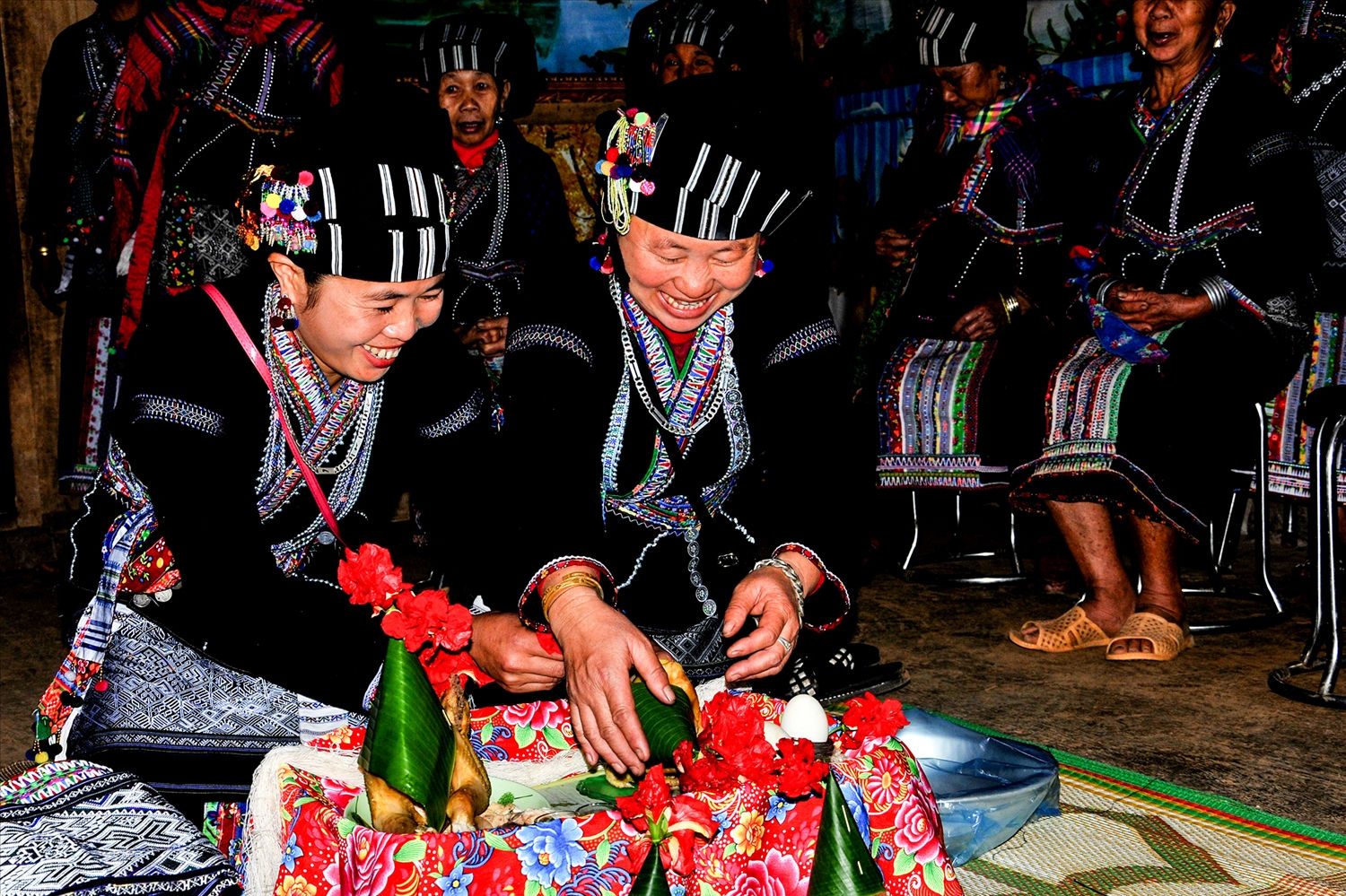
In the land of Nam Tam (Lai Chau), home to the Lu people, it has been a long-standing tradition for a new bride, following her wedding day, to carry water from the stream to offer to each of her husband's close relatives. At first glance, amidst the chaos of wedding preparations, seeing a bride stooped under the weight of a shoulder pole as she traverses streams and village paths might evoke sympathy, leading one to view it as an outdated custom that places an unfair burden on women.
However, if we judge only by this superficial layer, we overlook the profound humanistic meaning and the subtlety in the conduct of our ancestors.
According to the traditional customs of the Lu people, every load of water the bride delivers to her relatives is never a one-way gift. In return for this gift of sweat, the host will give the bride a present, most commonly a chicken. At first glance, this may seem like a trivial exchange. But more deeply, the material gifts accumulated from these water deliveries, and from the first pot of rice cooked for the clan, serve as precious initial capital. It represents the collective support, sharing, and practical assistance from the entire family to help the young couple begin building their new home.
More importantly, the post-wedding water delivery is not an imposed obligation, but a clever social initiation ritual. It is a way for a woman to officially enter her husband's clan network through a respectful introduction. By visiting each house and setting down the burden from her shoulders, the bride weaves close relationships, building a solid foundation of social capital for herself. Later on, this network of affection will serve as a sturdy support system, ensuring the economic and emotional well-being of the small family as they navigate life's challenges.
Vi Heritage - Respecting indigenous values, securing a sustainable future.
Ready for the journey?