"Clang, the sun.
Clang, the rain.
Sounds like the tram just passed by.
Hey you, from Hang Giay street.
Bo Ho – Buoi market, I pass by every day.
Clang, the rice village, the flower village.
The rhythm of the Yen Thai pestle, now near, now far..."
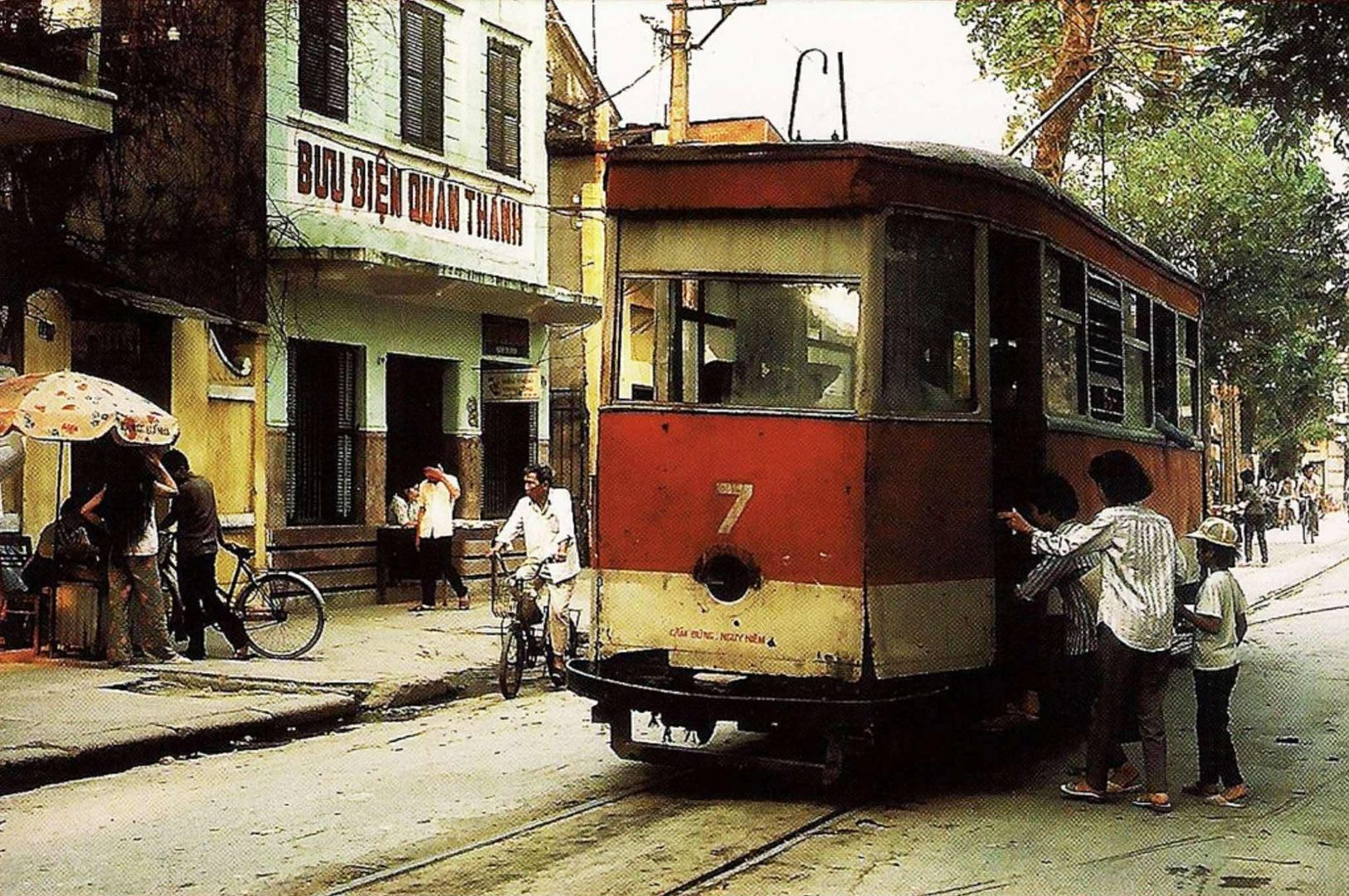
There is a sound that has remained forever in the memories of Hanoians from the last century. The clanging of the tram calling the streets to wake up at 5 a.m.
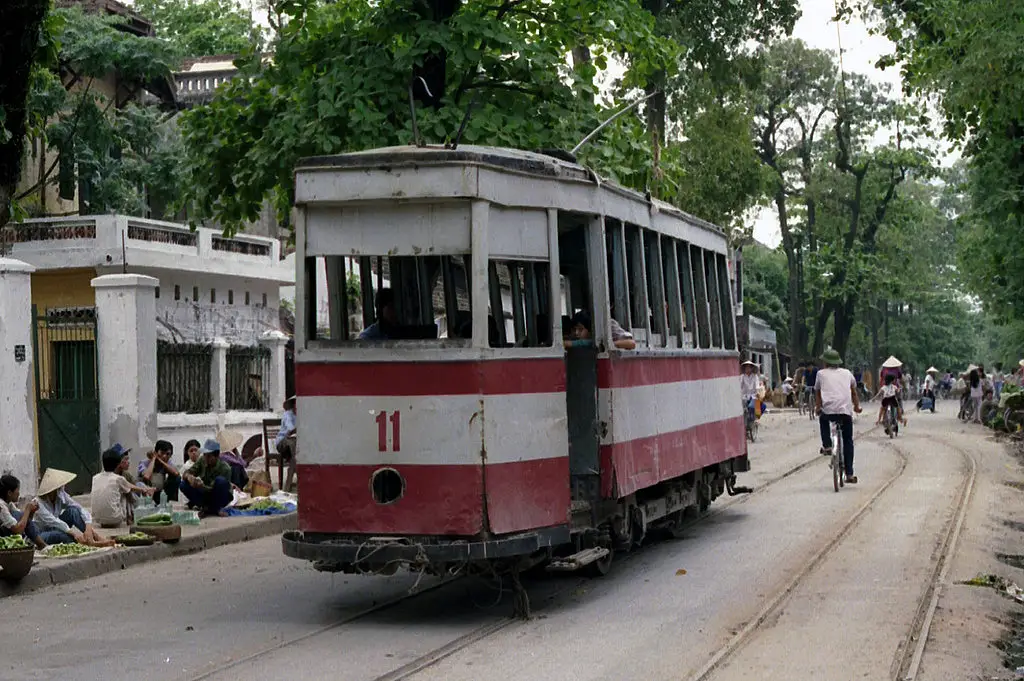
A tram passing through a street market.
In these days when the people of Hanoi and Saigon are eagerly embracing new experiences on modern metro lines, few remember that traveling by urban rail is not actually a new concept. More than a century ago, the capital city once had a bustling tram network that spanned nearly 90 years of history (from 1900 to the early 1990s). These are unforgettable memories and cultural legacies.
Originating from a decree in May 1899 by the Governor-General of Indochina, the first trams officially rolled out in 1900, then gradually expanded in 1901 with all the most advanced technology, locomotives, and independent power generation systems of the early 20th century brought to Vietnam. It was not until after 1925–1926, when the Yen Phu power plant was completed, that the trams officially ran on the power grid. By 1929, and reaching a milestone in 1943, the 1-meter gauge rail network had stretched to 30 km. From the central station at Bo Ho (right near the round water tank at the beginning of Hang Hanh street), six rail lines radiated to all the city gates: up to Yen Phu, Buoi market, over to Cau Giay, into Ha Dong, and down to Mo and Vong markets. The carriages, with a maximum length of 25m and a width of less than 2m, traveling at about 20km/h, became the traffic arteries connecting the suburban rice and flower villages with the bustling thirty-six streets.
In the early days, the tram was a dreamy symbol of modernity and class with extremely strict rules. Before 1954, ticket collectors (often called receveurs) would straightaway hook the chain across the door as soon as the tram started moving to strictly forbid jumping on the tram, while also firmly refusing anyone who was drunk or dressed in dirty, disheveled clothes. However, after the takeover of the Capital in 1954, when the system was transferred to the government of the Democratic Republic of Vietnam, the tram gradually shed its colonial pretentiousness to blend into everyday life.
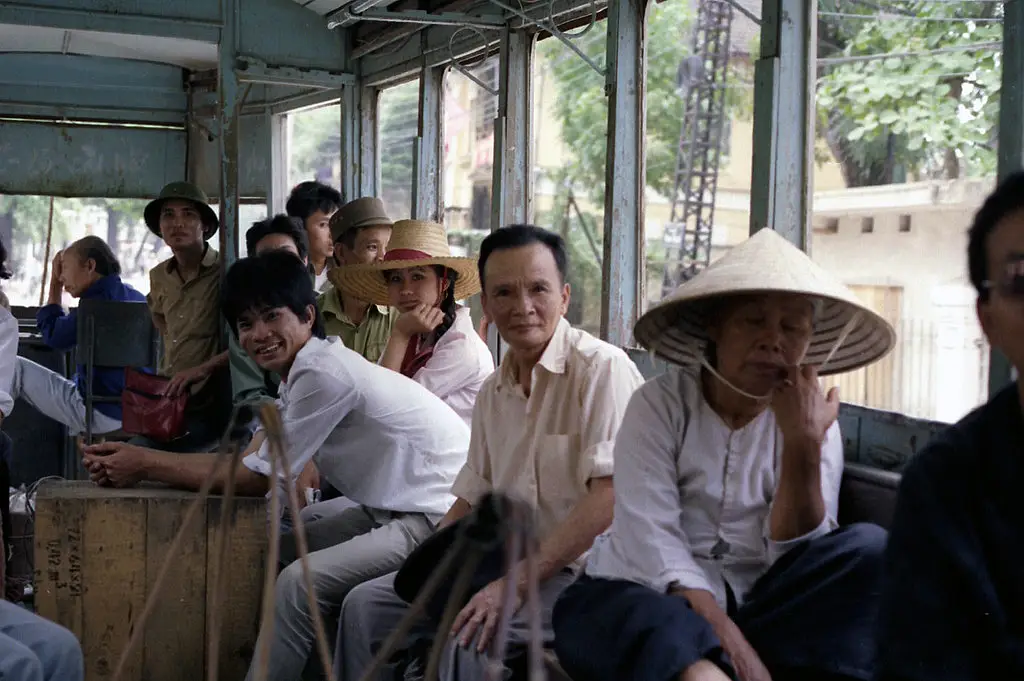
Passengers happily ride the tram as part of their daily routine.
Throughout the three decades after liberation, when Hanoians only had two main means of transport—bicycles and trams—the old yellow-painted carriages became a miniature society. It was a space for the livelihoods of small traders carrying goods from the suburbs into the city, a place echoing with the sounds of the dan bau played by blind street performers, the calls of street vendors, and the artistic leaps of students and young people whenever the stop was still far away. The sound of iron wheels grinding on the rails, mixed with the clanging of the bell stepped on the floor of the tram when passing intersections, became the familiar heartbeat of daily life. Even during the smoke-filled days of the National Resistance, those gentle passenger carriages quietly lay across street corners, turning into silent soldiers, sturdy steel barricades blocking the advance of the colonial motorized convoys.
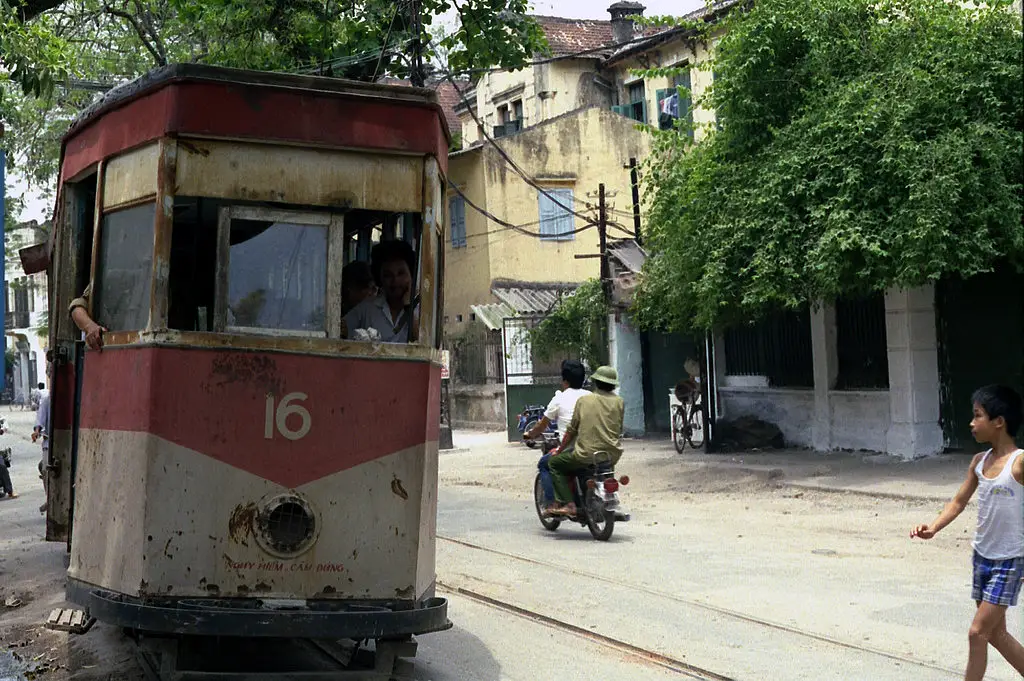
During its period of operation, carriage number 16 began to deteriorate.
In the early 1990s, when infrastructure had severely degraded after nearly a century of persistent service and had to make way for new transport projects, the historical mission of the surface tram officially came to an end. The last train to roll through the streets that year was an emotional farewell. Most of the passengers who boarded the carriage that day were elderly people, riding just to hold onto a piece of memory. The ticket collector no longer checked tickets as usual, but tearfully called out to see if anyone wanted to keep the last ticket as a souvenir, then busily tore them off for everyone around as if handing out the final pieces of the clanging tram into the realm of nostalgia.
Today, the rails of yesteryear have receded into the past, yielding space for metro trains that glide smoothly overhead at superior speeds. The changing face of the city is an inevitable law of the times, but the echo of the old tram bell still resonates in the souls, lifestyles, and memories of those who remain.
At Vi Heritage, we believe that the development of modern cities will always need a foundation from the depth of the past. Listening again to the clanging in our memories is not to regret a time that has passed, but to ensure that the industrial rhythm of today does not break away from the cultural roots of the capital. It is a place where every road, every street corner was once imbued with the warmth and simple humanity of an unforgettable era of Hanoi.
Ready for the journey?