If Italy prides itself on Grappa distilled from grape pomace, France has Cognac rich with the earthy flavors of the Charente region, the Japanese have Sake refined from underground springs, or China is famous for its thousand-year-old jars of Baijiu... Then Vietnam, throughout its long and tumultuous history, possesses a drink with a distinct character, deeply imbued with the spirit of its people. That is 'quoc lui' (moonshine) liquor.
The name, sounding both defiant and familiar, is more than just a drink; it is a piece of cultural soul, a proud, hidden corner of history for those whose lives are inextricably linked to the 'pearls of heaven'—rice.
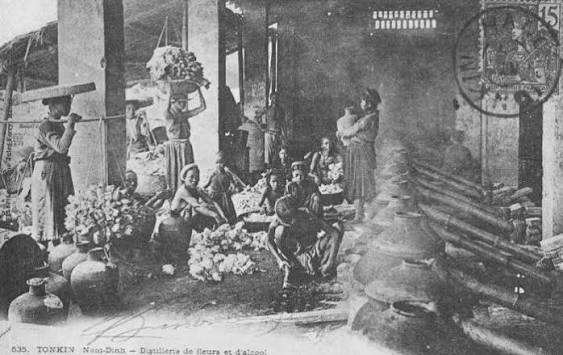
In the past, it was called 'cuoc lui' (the skulking rail) because of its elusive, hidden nature amidst strict prohibitions. During the French colonial period or the subsidy era, when private liquor distillation was stifled by rationing and regulations, the glowing embers under village stills burned persistently through the night in a state of anxious secrecy. Somewhere in a small hamlet, a few liters of leaf-yeast liquor had to bypass the authorities through a hundred clever tricks, from rubber bladders hidden around the waist to quarter-liter bottles hastily tucked behind bicycle baskets. The liquor had to 'skulk' like a rail bird hiding in the bushes, and the very name 'quoc lui' born from those turbulent times now flows vigorously through the veins of everyday life.
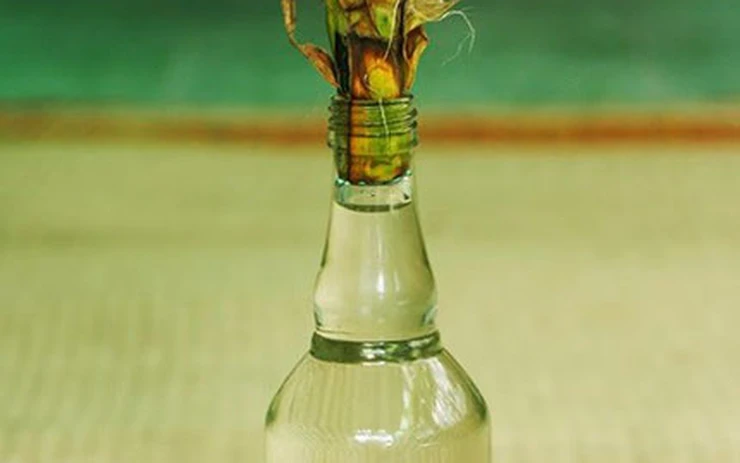
Crafting a drop of 'quoc lui' is a distillation of the essence of wet-rice civilization. Pure white non-glutinous rice or fragrant yellow-flower glutinous rice harvested from alluvial fields is meticulously steamed by the artisan to preserve the full sweetness of the starch. The soul of the liquor lies in the traditional leaf-yeast, a blend of roots and medicinal herbs pounded together with rice flour, left to ferment silently through the sweltering heat of summer or the biting cold of winter. Placing the still over a crackling wood fire, the vapor is channeled through a bamboo pipe, condensing into drops of liquor with white, frothy bubbles—potent, aromatic, and rich with the flavors of the earth and sky.
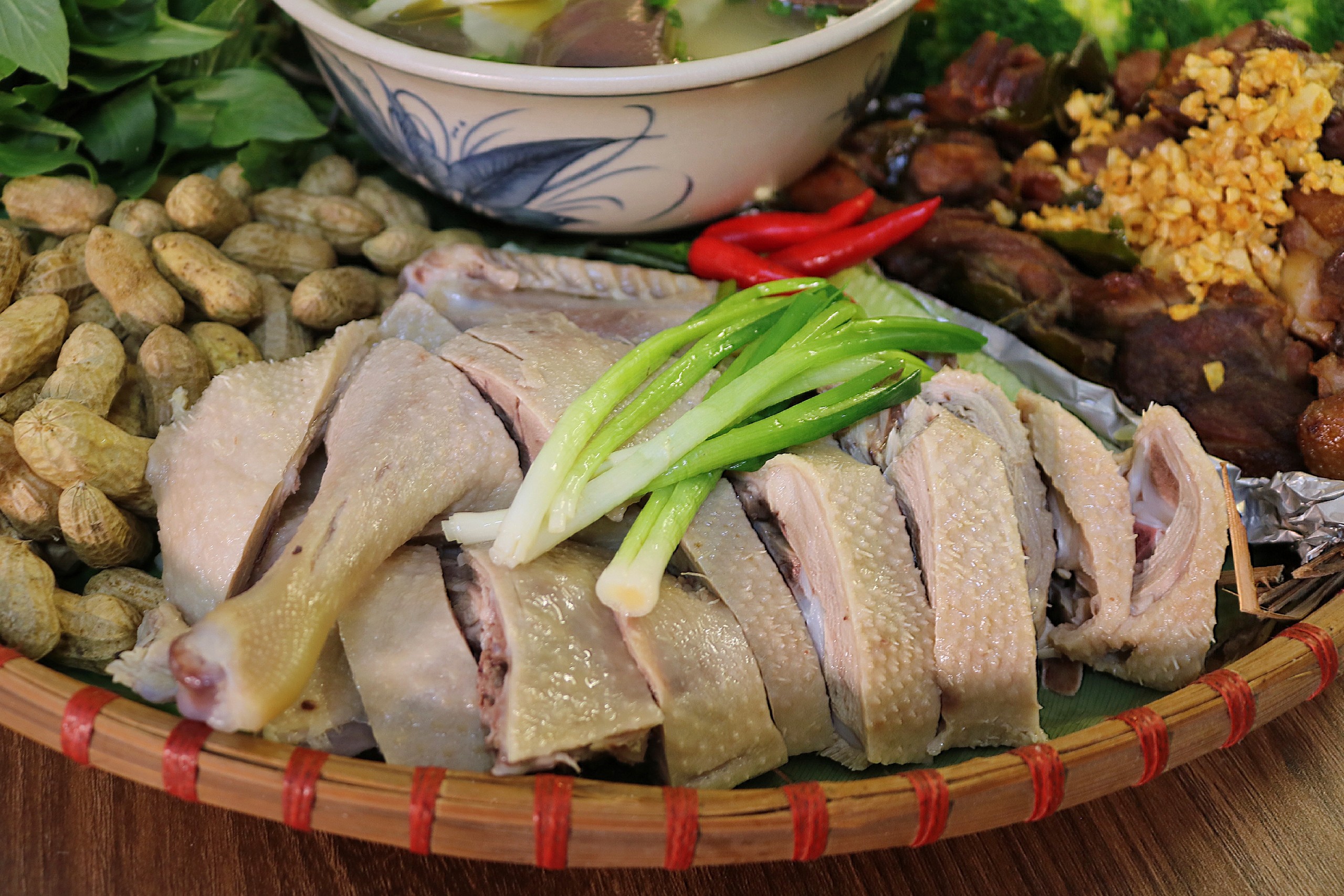
Vietnamese people often bring out a cup of 'quoc lui' on special occasions rooted in community and gratitude. It is present at death anniversaries, where descendants bow to offer the purest first drops on the ancestral altar. It is there at weddings, festivals, or when a household has major or minor events requiring a few baskets of local gifts for visitors. This liquor was not born to be sipped delicately from luxurious crystal glasses, but to be enjoyed on chilly afternoons on a tiled porch or at a roadside green tea stall. Poured into a tiny ceramic cup, a single sip brings a sharp, throat-searing heat that spreads quickly, igniting warmth in every vein, eventually leaving behind the gentle, lingering sweetness of glutinous rice. The snacks are equally rustic: a few roasted peanuts with basil, a plate of nem chao (fermented pork skin salad), or a few crisp, sweet persimmons. Vietnamese people sit together, and the cup of liquor becomes an excuse to open one's heart, to chat about the harvest, or to find a moment of peace amidst the drifting currents of life.
The reason this rustic liquor is likened to the 'national soul and essence' is that it fully distills the spirit, resilience, and camaraderie of the Vietnamese people. It is not flashy or luxurious, but it has endured through years of famine, war, and the subsidy era, representing the essence of our village rice and the neighborly bond of helping one another through thick and thin.
Today, as the hardships of the past have faded into memory and village liquor has rightfully risen to become a specialty, the mention of 'quoc lui' still brings a sting to the nose. It is a witness to a difficult yet affectionate time, a cultural corner that, even in the midst of bustling urban life, we still yearn to return to, to touch the most rustic and sincere part of our roots.
Discover Vietnam, experience its heritage, reconnect with yourself.
Ready for the journey?