Banh mi originally followed the French into Vietnam in the form of a long, dense baguette with a hard crust, primarily served with butter or soup in restaurants. However, upon arriving in Vietnam, with its hot and humid tropical climate and the pace of Vietnamese life, the original loaf revealed several aspects that needed to be adapted.
The crust was too hard and easily became soggy, while the dense, chewy crumb felt heavy to those accustomed to eating soft, fluffy rice.
By the 1950s, bakers in Saigon took the initiative to make changes. They added rice flour to the wheat flour to reduce the chewiness and adjusted the oven temperature to produce a shorter loaf that fit comfortably in the hand. The baked crust became thin and crispy, while the inside was light, airy, and full of pockets. This "hollow" interior inadvertently turned the loaf into a perfect pouch for stuffing with various fillings.
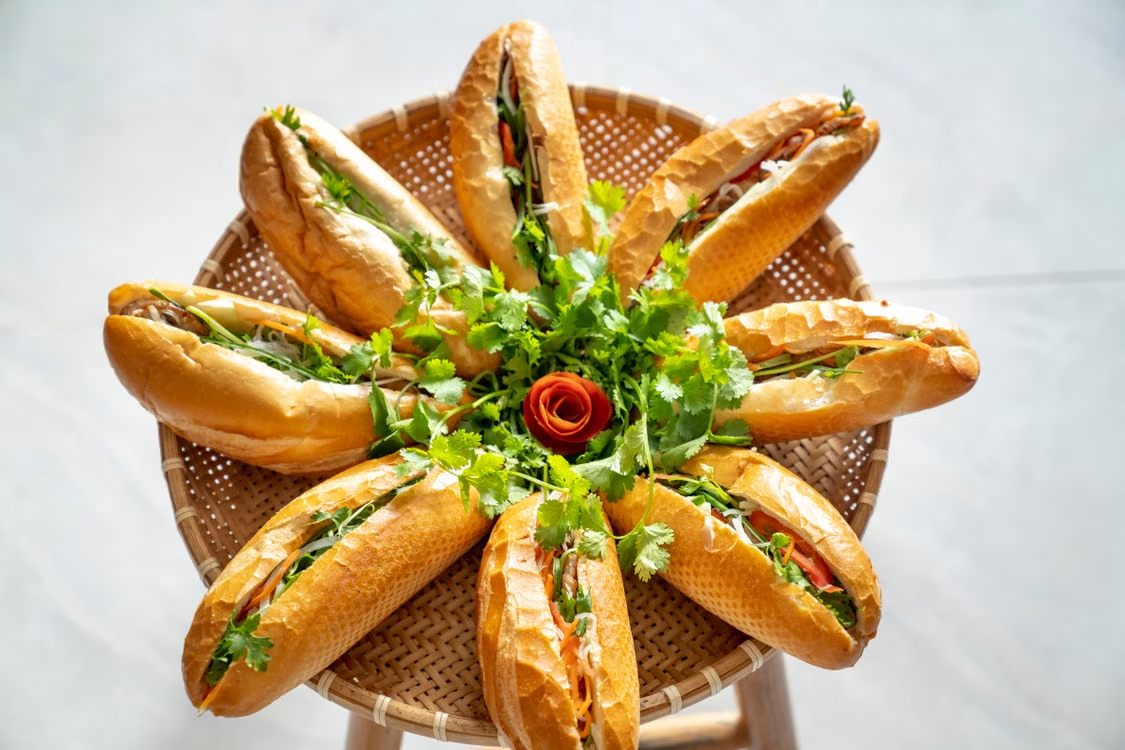
It is thanks to this pouch that the banh mi can fully embrace the flavors of a Vietnamese meal. Taking a bite, the first sensation is the crispy crust shattering with a rustle, followed by the soft, airy crumb. Immediately after comes the rich, comforting taste of thinly spread liver pâté and the savory aroma of Vietnamese sausage or grilled meat. The richness of the meat fat is instantly balanced by the tangy, crunchy pickled vegetables, the refreshing coolness of cucumber, and the distinct, pungent flavor of cilantro and a few slices of bird's eye chili. With a dash of soy sauce or a rich gravy, the sour, salty, sweet, spicy, and fatty flavors meld together right on the tongue.
Traveling to Central Vietnam, banh mi takes on a completely different character with the Da Nang roast pork banh mi. The filling consists of strips of freshly roasted pork, chopped into thick, square pieces. The vendor quickly slices open a hot loaf of bread and piles it high with strips of roast pork that make your mouth water. The pork skin is crispy, crackling in your mouth with every bite. The thin layer of fat between the lean meat, drizzled with hot sauce, melts and seeps deep into the soft, airy bread. But the soul that keeps people coming back lies in the pan of gravy used to dress the bread—a sauce simmered from the juices of the roast pork mixed with fermented fish sauce or a rich soy sauce, characterized by a deep sweetness, intense saltiness, and the fiery heat of crushed green chilies. Taking a bite, the richness of the pork fat, the crunch of the skin, the pungency of the green chili, and the thinly sliced cucumber all come together, making you gasp with delight while unable to stop eating.
Vietnamese banh mi is special because it is tied to everyday life. It is found on pushcarts at the end of the alley, in the hands of early commuters, or with children on their way to school. The Vietnamese took an external dish, adapted it to be rustic and suitable for themselves, and turned it into an essential part of daily life. That is how Vietnamese culture receives and renews heritage: simply, practically, and naturally.
Ready for the journey?